
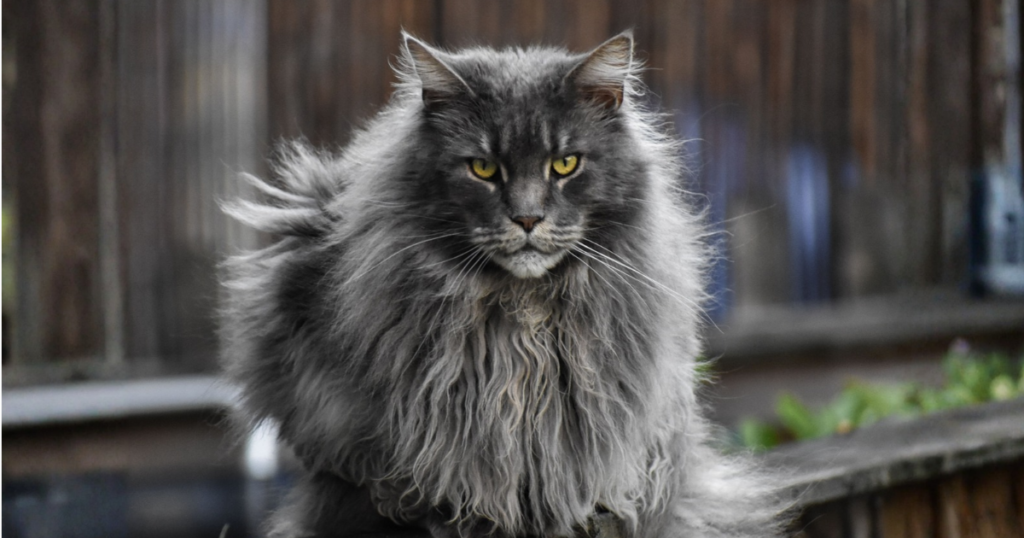
Maine Coons carry a single-letter genetic mutation that can trigger sudden cardiac death by age 4. Here’s what the science actually says, and how insurance timing intersects with a mutation your cat may already carry.
Maine Coon Pet Insurance: What the Genetic Data Actually Shows
Somewhere between 1 in 10 and 1 in 4 Maine Coons carries the genetic makings of a heart condition that can kill without warning. That’s not a scare tactic, it’s the range found across peer-reviewed prevalence studies of the breed.
What makes this different from most breed health risks, and different from most other Maine Coon pet insurance discussions online, is that scientists have actually pinpointed the exact genetic mutation responsible, down to a single amino acid substitution, and a test exists to check for it.
Very few conditions in veterinary genetics are this well mapped, which makes the Maine Coon a genuinely unusual case for how insurance timing intersects with hard genetic science.
The mutation, in plain terms
MYBPC3, A31P variantResearchers at UC Davis identified a specific mutation in the cardiac myosin binding protein C gene that’s strongly associated with hypertrophic cardiomyopathy in Maine Coons. Cats with two copies of the mutation face moderate to severe disease that can cause sudden death by age 4 or younger.
Cats with just one copy have a longer life expectancy but can still develop the disease. A genetic test can tell you which category your cat falls into, though a negative result doesn’t guarantee a Maine Coon will never develop HCM, since the disease can appear through other pathways too.
Why this breed’s heart risk matters so much for Maine Coon pet insurance
Most hereditary conditions in pets are probabilistic in a vague way: a breed is “prone to” something, without much more precision than that.
HCM in Maine Coons is unusual because researchers have actually traced it to a specific point mutation, a single base pair change in the MYBPC3 gene, and study after study keeps confirming the association.
One investigation found the A31P and a related A74T variant present in 16.33% and 24.45% of the Maine Coons tested, respectively, with HCM risk climbing alongside age, body weight, and heart rate.
The disease itself causes the heart’s left ventricular wall to thicken abnormally, reducing how efficiently the heart pumps blood. It’s classified as a disease of incomplete penetrance, meaning carrying the mutation doesn’t guarantee a cat will develop symptoms, and a cat without the mutation can still develop HCM through other causes.
Most cats show no signs until after age three, though some don’t develop it until 6 to 8 years old, and diagnosis is genuinely tricky: many healthy cats have benign heart murmurs, and many cats with HCM have no murmur at all. That combination is exactly why cardiologists recommend echocardiograms rather than relying on a stethoscope alone.
What actually happens to a policy once HCM is diagnosed
The direct answer
Once HCM is diagnosed, or even just noted as a suspected finding in your cat’s medical records, it becomes a pre-existing condition under any pet insurance policy, current or future. No provider will cover treatment for it retroactively or after the fact.
What the policy still covers is everything unrelated: injuries, infections, cancer, dental disease, and any other new diagnosis. This is exactly why breed-aware Maine Coon pet insurance shoppers are told to enroll before any cardiac workup ever happens, not after a murmur is first mentioned at a routine visit.
This creates a genuinely uncomfortable dilemma some owners don’t realize until it’s too late. Getting an early genetic test or baseline echocardiogram is good preventive medicine, but if that screening turns up even an ambiguous finding before you’ve locked in a policy, that finding itself can become the pre-existing condition, even without a formal HCM diagnosis.
There’s no universally right answer here, but knowing this tradeoff exists before you schedule that first cardiac screening is valuable information on its own.
What Maine Coon insurance actually costs
Pricing data for this breed is genuinely inconsistent across sources, more so than most breeds, and it’s worth showing that range honestly rather than picking one number.
| Source | Reported average or range |
|---|---|
| Independent breed-cost analysis | $71/month average, ranked 3rd most expensive cat breed |
| Compare.com | Slightly above the $23/month national cat average |
| PetInsureNow | $36.75/month average, up to $71 at the high end |
| Age-tiered comparison | $20 to $100/month depending on life stage |
| Provider comparison | $15 to $70/month across Lemonade, Healthy Paws, Trupanion, ASPCA |
The spread is wide enough that a single “average” number would actually be less useful than seeing the age-based breakdown, since a Maine Coon’s premium changes substantially over its lifetime.
Cost by life stage
A $250 annual deductible with 90% reimbursement is the most commonly selected configuration among Maine Coon owners, according to breed-specific insurance research, and provides meaningful protection without an excessive premium.
What else drives cost beyond the heart
HCM gets most of the attention, understandably, but it isn’t the only condition insurers price in for this breed.
Hip dysplasia
As one of the largest domestic cat breeds, with males regularly reaching 15 to 25 pounds, Maine Coons carry elevated joint stress that contributes to hip dysplasia risk, a condition more commonly associated with large dog breeds but genuinely present in this cat breed too.
Polycystic kidney disease and spinal muscular atrophy
Both are documented hereditary risks in the breed. Spinal muscular atrophy is Maine Coon-specific and affects motor neurons, while polycystic kidney disease involves progressive cyst formation in the kidneys that can eventually lead to kidney failure. Genetic tests exist for both conditions too, though neither carries the same sudden, dramatic risk profile as HCM.
Dental disease
This affects the vast majority of cats by age three regardless of breed, Maine Coons included. Full mouth extractions, sometimes the only long-term fix for severe stomatitis, run $1,500 to $3,000, while routine cleanings under anesthesia cost $300 to $800.
A cost comparison worth sitting with
A Maine Coon kitten insured at roughly $28 a month costs $336 a year in premiums. A single HCM echocardiogram alone costs more than that. That comparison, more than any national average, is probably the clearest way to think about whether coverage makes sense for this specific breed.
Comparing providers for Maine Coon owners
| Provider | Price range | Notable detail |
|---|---|---|
| Lemonade | $15 to $40/month | Lowest starting rates; fast digital claims processing |
| Healthy Paws | $20 to $50/month | Unlimited annual coverage limit |
| Trupanion | $30 to $70/month | Highest reimbursement rate at 90%; no annual payout cap |
| ASPCA | $18 to $45/month | Some flexibility on curable pre-existing conditions after a symptom-free period |
| Rainwalk | Around $35/month | Notably competitive specifically for Maine Coons; includes vaccine reimbursement |
Always confirm current terms directly with the provider, since pricing and policy details are updated periodically and vary by state.
Should you get the genetic test before buying insurance?
There’s no clean answer here, and it’s worth being honest about that rather than pretending otherwise, since well-meaning breed advocates sometimes present this as more straightforward than it actually is.
A genetic test can inform breeding decisions and how closely you monitor your cat as it ages, and knowing your cat carries zero copies of the mutation can be genuinely reassuring.
But a positive result, or even an ambiguous echocardiogram finding, obtained before you’ve secured a policy could complicate future coverage if an insurer treats that finding as an early marker of the condition.
The most conservative approach many breed-aware owners take is enrolling in insurance first, as early as possible, ideally as a kitten, before pursuing any cardiac screening beyond what a routine kitten wellness visit already includes. That way, if a screening later turns up something, the policy is already in place and the condition wasn’t pre-existing at enrollment.
Frequently asked questions
It varies enormously depending on genetics and severity. Cats with two copies of the MYBPC3 A31P mutation can face moderate to severe disease and sudden death by age 4 or younger. Cats with one copy or milder presentations can live considerably longer, sometimes with minimal impact from the condition.
Only if the cat was enrolled and the diagnosis, or any documented symptom or suspicious finding, occurred after the waiting period passed. Once HCM is diagnosed or noted in records, it becomes permanently excluded as a pre-existing condition under any policy, present or future.
Typically $375 to $750 per screening, with some sources citing a broader cardiac workup range of $800 to $2,000 depending on what’s included. Many veterinary cardiologists recommend annual screening for at-risk breeds starting around age one.
Often yes, specifically because Maine Coon pet insurance enrolled before any cardiac finding is the only way to guarantee HCM-related costs would be covered if the condition develops later. A kitten’s premium is also the cheapest point in the cat’s lifetime to lock in coverage.
This depends on the insurer and how the result is documented. A test showing the mutation isn’t the same as a diagnosis, but if it leads to follow-up cardiac findings before a policy is in place, those findings could be treated as pre-existing. Confirm directly with any insurer how they handle genetic test results specifically.
Beyond HCM, hip dysplasia, polycystic kidney disease, spinal muscular atrophy, and dental disease are all documented risks in the breed. A comprehensive accident-and-illness plan covers all of these when the cat is enrolled before symptoms appear.
The bottom line
Maine Coons carry one of the most precisely mapped genetic health risks of any companion animal breed, a single identifiable mutation tied to a condition that can be fatal without warning. That precision doesn’t make the disease less serious, but it does make the Maine Coon pet insurance decision unusually clear cut: enroll before any cardiac screening happens, not after.
Between a $22 to $92 monthly premium range and echocardiograms alone running $375 to $750, the math tends to favor early coverage for a breed with this much documented cardiac risk.
For more on how pre-existing condition rules work in general, see our Pre-Existing Conditions guide, or read about how insurers handle hip dysplasia, a condition that also affects this breed. Explore our dog breed guides for comparison across species. You can also learn more about how we research every guide on our About page.
Sources
- UC Davis Veterinary Genetics Laboratory, HCM in Maine Coons
- Prevalence of Myocardial Hypertrophy in Swedish Maine Coon Cats (peer-reviewed)
- Prevalence of MYBPC3 Mutations in Maine Coon Cats with HCM, Veterinary World (2022)
- Clinical Significance of the p.A31P cMyBP-C Mutation in Young Maine Coon Cats
- Compare.com, Best Pet Insurance for Maine Coons
- NC State Veterinary Hospital, Maine Coon HCM
Sarah researches and writes PetCoverToday's guides, checking every cost figure, coverage term, and policy rule directly against insurers' own published pages and, where relevant, veterinary and industry sources. PetCoverToday is an independent research resource, not a licensed insurance agency, and does not sell policies directly. Read more about how we research and fact-check every guide.