
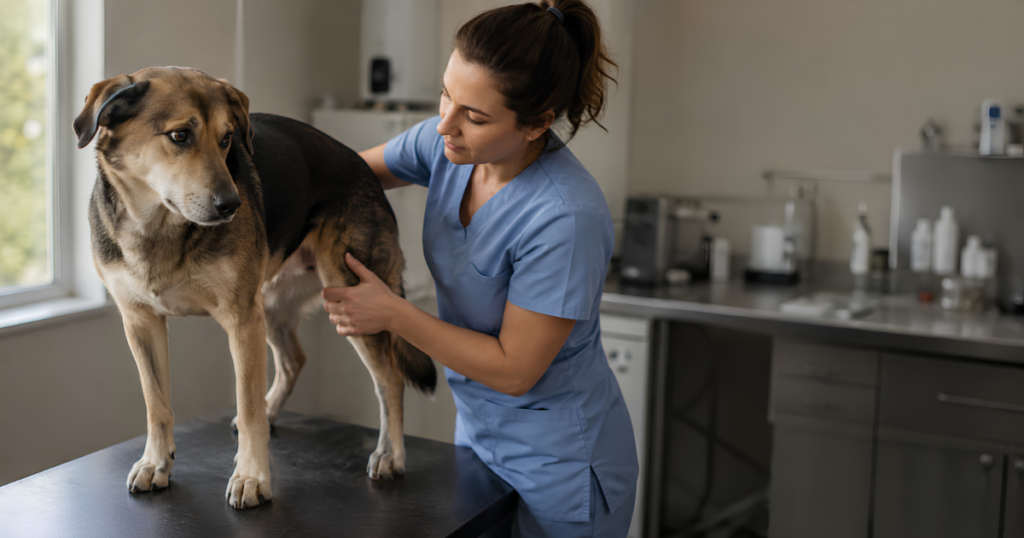
Hip dysplasia surgery can cost anywhere from about $1,000 to more than $10,000 per hip, and whether a policy pays turns on three details: the waiting period, what happens to the second hip, and how old the dog is at enrollment.
Pet Insurance Hip Dysplasia Coverage: Rules by Insurer
Quick answer
Usually yes, if the dog showed no signs before the policy started or during the waiting period. Embrace, Fetch, Lemonade, Pets Best, ASPCA, Healthy Paws and Nationwide all list hip dysplasia as an eligible hereditary condition, with different strings attached.
The strings are the point. Embrace applies a 180-day window, Fetch a 6-month orthopedic wait, Healthy Paws requires enrollment before the dog turns 6, and Nationwide needs an optional hereditary add-on.
Pet insurance hip dysplasia coverage is easy to misjudge from the headline. Every insurer says it covers the condition, and the policies still behave differently once a dog is limping at 18 months.
This guide lays out each insurer’s published terms, the surgery costs behind the claims, and what the second-hip question means for a young dog. Where an insurer does not publish a detail, we say so instead of guessing.
Key takeaways
- Enrollment timing decides most claims. Every insurer excludes signs that appeared before the policy or during the waiting period.
- The waiting periods differ. Embrace uses a 180-day window for dogs, and Fetch uses 6 months for orthopedic conditions. Nationwide says most plans start 14 days after approval, and Pets Best says its waits vary by state.
- The second hip can be excluded. Embrace says a pre-existing hip can lead to a bilateral exclusion, and Lemonade says a dog with hip dysplasia in one hip at enrollment will not be covered for the other.
- Age rules vary. Healthy Paws requires enrollment before age 6, Fetch says no age limit applies, and Pets Best says older dogs can be covered.
- Surgery prices vary a lot. Published ranges run from about $1,000 for a simple FHO to $15,000 or more for a total hip replacement on one hip.
What Hip Dysplasia Is and Who Gets It
Hip dysplasia is a malformation of the hip joint. The ball of the thigh bone does not fit snugly in the socket, so the joint wears unevenly and develops arthritis. Signs include a bunny-hopping gait, reluctance to climb stairs and stiffness after rest.
The condition is hereditary and most often found in medium and large breeds. Embrace names German Shepherds and Labrador Retrievers as higher-risk breeds, and notes that it covers them as long as the dog was enrolled before symptoms began. Our breed guides for the German Shepherd, Labrador Retriever, Golden Retriever and Rottweiler go into each breed’s other risks.
Bigger dogs are not the only candidates. Heavy, short-limbed breeds such as the English Bulldog and the Great Dane are also known for joint trouble, and the Bernese Mountain Dog and Newfoundland are large breeds where joint disease is a recurring theme. Our breed health risk finder shows where your dog sits.
Hip Dysplasia Surgery Cost Without Pet Insurance
Costs depend on which procedure the surgeon recommends and where you live. These are the ranges two insurers publish in their own cost guides.
| Procedure | Pets Best range | Lemonade range |
|---|---|---|
| Femoral head ostectomy (FHO), per hip | $1,000 to $2,500 | $1,200 to $3,000 or more |
| Double or triple pelvic osteotomy (DPO/TPO) | About $3,000 to $6,000 per hip | From about $3,000 for both hips |
| Total hip replacement (THR), per hip | $4,000 to $10,000 | $3,500 to $15,000 or more |
| Physiotherapy | About $100 per visit | Not stated |
Embrace’s own page estimates FHO at $1,200 to $4,500 and THR at $3,500 to $7,000 per hip. Fetch reports an average hip dysplasia claim of $375.01 and a largest claim of $9,548.43, which shows how wide the spread is between a routine visit and a surgical year.
Healthy Paws gives a range of $1,700 to over $6,000 for surgical options and shares one claim example: $12,407 in total claims across two surgeries, with $8,686 reimbursed. It describes the example as illustrative. Lemonade’s January 2025 claim data puts the average cost to diagnose at $1,500 and to treat at $5,200.
How Each Insurer Handles Pet Insurance Hip Dysplasia Claims
The table below uses each insurer’s published wording. Where a page does not state a detail, the cell says so.
| Insurer | What the published terms say |
|---|---|
| Embrace | Hip dysplasia is excluded if it occurs or shows symptoms before the illness waiting period ends or during the first 180 days, and is then pre-existing for the life of the policy. In some states an exam within the first 14 days can shorten the wait. Embrace says bilateral exclusions may apply. |
| Fetch | Covers hip dysplasia if it is not pre-existing, with a 6-month orthopedic waiting period. Says coverage applies no matter how old the pet is. Bilateral treatment is not addressed. |
| Lemonade | Hip dysplasia in one hip at enrollment is pre-existing, and the other hip would not be covered if it developed later. Needs no signs in the medical record at sign-up or during the waiting period. |
| Pets Best | Hip dysplasia surgery, including total hip replacement, is covered if no signs showed before the policy. A policy bought at 8 can cover hip dysplasia first showing at 10. Waiting periods vary by state. |
| Healthy Paws | Covers diagnostics, surgery, hospital care and medication, but only if the pet is under 6 at enrollment. The exam fee is not covered. The page gives no waiting period length. |
| Nationwide | Needs the optional Hereditary and Congenital add-on on an Accident and Illness plan. Most plans start 14 days after approval. Predictive testing is excluded. Plans start at $55 a month. |
| ASPCA | Lists hip dysplasia as a hereditary condition eligible under Complete Coverage. Conditions before coverage or during a waiting period are pre-existing, with no waiting period length stated on the page we checked. |
We could not confirm a hip dysplasia waiting period for Trupanion, MetLife or Spot from their public pages, so they are not in the table. Check any quote against the sample policy for your state.
The Orthopedic Waiting Period
Embrace’s help page lists IVDD, cruciate ligament injury, patellar luxation and canine hip dysplasia together. Dogs showing signs before the illness waiting period ends, or in the first 180 days, lose coverage for that condition for good. Fetch uses 6 months for orthopedic conditions including hip dysplasia, and its separate exam waiver is described for knee injuries only.
Our guide to pet insurance waiting periods compares the numbers across insurers, and the page on ACL and CCL surgery coverage covers the knee side of the same rule.
The Second Hip Question
Because hip dysplasia is usually in both hips, the way an insurer treats a second hip can matter as much as the first surgery.
Two situations, two outcomes
The second hip may be excluded. Lemonade says hip dysplasia in one hip at enrollment is pre-existing, and the other hip would not be covered if it developed later. Embrace says if one hip is deemed pre-existing, the other may be excluded too. Fetch and Healthy Paws do not address it on the pages we checked, so ask before buying.
Both hips are usually eligible. Lemonade says that if the dog was insured before showing any signs, it could help cover surgery on both hips. The condition has to appear after the waiting period, and the medical record should show no signs at sign-up.
Age at Enrollment
Healthy Paws requires the pet to be less than 6 years old when you enroll. Fetch says no age limit applies, and Pets Best says older dogs can be covered as long as there were no signs before the policy. Nationwide notes that older pets may need medical records to determine eligibility.
Plans That Will Not Pay
Accident-only plans do not cover hip dysplasia, because it is an illness. Our accident-only versus illness plan guide explains the difference.
How to Make Sure Hip Dysplasia Coverage Applies to Your Dog
- Enroll before the first limp. The pre-existing definition covers signs, not only diagnosis. See our guide to pre-existing conditions.
- Know your waiting period. It varies by state, so read the sample policy and not only the marketing page.
- Ask about the second hip. Put the question in writing and keep the answer.
- Check the annual limit. Healthy Paws’s two-surgery example reached $12,407, so a low cap can run out.
- Keep vet records clean. A note about stiffness or a sore back leg can be read as an early sign, so ask your vet to document what they find.
- Know what is excluded. Nationwide, for one, does not cover predictive testing for hip dysplasia, so a screening X-ray is a cost you pay yourself.
Is Pet Insurance Hip Dysplasia Coverage Worth It?
For a large-breed puppy, usually yes. A premium for a young dog is modest, and a single hip operation can cost several thousand dollars. Healthy Paws’s example shows two surgeries adding up to more than $12,000.
The honest limit: if your dog already shows signs, a new policy will not pay for hip dysplasia, so the comparison becomes the cost of surgery against your savings. In that case, ask your vet about the full range of treatments, since FHO and medical management cost far less than a total hip replacement.
Our guide on whether pet insurance is worth it sets out the general math, and the vet cost insurance checker estimates the payout on a typical bill.
Frequently Asked Questions
Usually, if the condition is not pre-existing. Embrace, Fetch, Lemonade, Pets Best, ASPCA, Healthy Paws and Nationwide all list hip dysplasia as eligible, each with its own waiting period and enrollment rules.
It depends on the insurer and the state. Embrace excludes signs in the first 180 days, Fetch uses 6 months for orthopedic conditions, and Nationwide says most plans start 14 days after approval. Pets Best and others vary by state.
Only if neither hip showed signs before coverage. Lemonade says a dog with hip dysplasia in one hip at enrollment will not be covered for the other hip, and Embrace says a bilateral exclusion may apply.
It depends. Healthy Paws requires enrollment before age 6, Fetch says no age limit applies, and Pets Best says older dogs can be covered if there were no signs before the policy.
Pets Best lists FHO at $1,000 to $2,500 per hip, DPO or TPO at about $3,000 to $6,000 per hip and total hip replacement at $4,000 to $10,000 per hip. Lemonade lists THR at $3,500 to $15,000 or more per hip.
Yes, through its optional Hereditary and Congenital coverage added to an Accident and Illness plan. Predictive testing for hip dysplasia is excluded.
The Bottom Line
Pet insurance hip dysplasia coverage is real, and it is conditional. It pays for dogs that were enrolled and symptom-free, after a waiting period that can run as long as six months, and it may not cover a second hip if the first was already affected.
If you own or are buying a large-breed puppy, enroll early and read the orthopedic terms before the price. Compare insurers in our best pet insurance companies guide, and read how we research every page on our About page.
Sources
- Embrace Pet Insurance, Waiting Period for Orthopedic Conditions
- Embrace Pet Insurance, Does Pet Insurance Cover Hip Dysplasia
- Fetch, Pet Insurance and Hip Dysplasia
- Fetch, Pet Insurance Waiting Period
- Lemonade, Hip Dysplasia Surgery Costs for Dogs
- Pets Best, Hip Dysplasia in Dogs Costs
- Healthy Paws, Pet Insurance for Hip Dysplasia
- Nationwide, Hip Dysplasia Pet Insurance Coverage
- ASPCA Pet Health Insurance, What Does Pet Insurance Cover
The PetCoverToday Editorial Team develops and maintains the guides on this site, checking cost figures, coverage terms, and policy rules against insurers' own published pages and, where relevant, veterinary and industry sources. PetCoverToday is an informational website, not a licensed insurance agency, and does not sell policies. Read more about our editorial approach.