
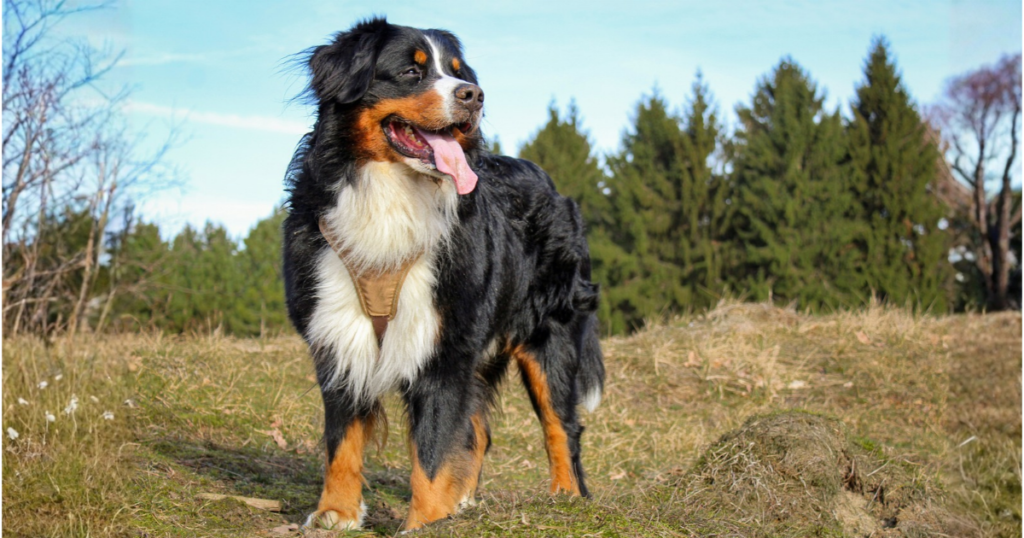
Two separate peer reviewed studies put Bernese Mountain Dog cancer mortality above 55 percent, the highest documented rate of any breed. Here is what that actually means for a family bringing one home.
Bernese Mountain Dog Pet Insurance: The Breed’s 50 Percent Cancer Reality
There is a number that shapes almost everything about owning a Bernese Mountain Dog, and it is worth stating plainly before anything else. A peer reviewed study published in BMC Veterinary Research found that 58.3 percent of Bernese Mountain Dogs died of cancer.
A separate study of the Dutch population, published in a veterinary oncology journal, found the figure at 55.1 percent. Two independent research groups, working with different populations, landed within three points of each other on the single worst statistic a dog owner can hear about a breed they love.
This is why Bernese Mountain Dog pet insurance deserves a genuinely different conversation than most breed guides get. It is not a question of whether a particular condition might come up. For this breed, cancer is closer to the expected outcome than the exception, and the practical question becomes how you prepare for that financially, and how early.
Why this breed’s cancer rate is genuinely unusual
Most cancer prone breeds carry an elevated risk of one or two specific tumor types layered on top of ordinary background cancer risk. Bernese Mountain Dogs are different because of one condition in particular: histiocytic sarcoma, an aggressive cancer of immune cells that is rare in dogs generally.
It strikes an estimated 20 to 25 percent of Berners specifically. Researchers who study the disease describe it as disproportionately, almost uniquely, concentrated in this one breed, to the point that Bernese Mountain Dogs have become something of a natural research population for understanding how the cancer behaves.
The origin appears to trace back to the breed’s own history. Bernese Mountain Dogs went through a significant genetic bottleneck, a period where the breeding population narrowed considerably.
That reduced genetic diversity is widely believed to be connected to how concentrated certain cancer risks became across the modern breed. It is a sobering example of how a breed’s popularity and its health can move in opposite directions over generations.
The timing problem most owners don’t expect
Here is the detail that changes how you should think about Bernese Mountain Dog pet insurance timing specifically. In most of the cancer prone breeds we’ve researched, risk climbs with age and tends to cluster around 8 to 10 years old.
Bernese Mountain Dogs break that pattern. Veterinary sources describe cases appearing as early as 1 to 2 years of age, well within what most owners would still consider puppyhood for a giant breed.
The usual advice to simply enroll early and let the years of protection accumulate still applies, but the window in which that protection actually needs to work is shorter and starts sooner than owners typically plan for.
The rest of the risk profile
Cancer dominates the conversation for good reason, but it isn’t the only condition worth budgeting for. Hip and elbow dysplasia are common in the breed, consistent with most giant breeds carrying substantial joint stress.
Bloat, the sudden and life threatening twisting of the stomach, is a real risk given the breed’s deep chest. Degenerative myelopathy, a progressive spinal cord disease that eventually affects mobility, also appears in the breed at a higher rate than average.
| Condition or procedure | Typical cost range |
|---|---|
| Histiocytic sarcoma treatment (surgery, specialist consult, ongoing care) | $3,000 to $20,000 |
| Hip or elbow dysplasia treatment (full range) | $2,000 to $10,000 |
| Bloat emergency surgery | $3,000 to $8,000 |
| Blood disorder diagnostics and treatment (advanced cases) | $9,000 to $12,000 |
| Routine annual vet care | $600 to $1,200 |
| Lifetime veterinary spend, full range across sources | $15,000 to $60,000 |
That lifetime range is wide because it depends heavily on whether cancer appears and how aggressively it’s treated. A dog that develops histiocytic sarcoma and receives full treatment, and later also needs hip surgery, can realistically land at the high end of that spread.
That total often comes within a handful of years, not spread across a long retirement the way the number might suggest for a longer lived breed.
What Bernese Mountain Dog pet insurance actually costs
Pricing for Bernese Mountain Dog pet insurance is more consistent across sources than we usually see, which itself is worth noting. One independent comparison’s May 2026 data puts the average premium at $65.36 a month, with a typical range of $43.98 to $91.13.
Fetch reports a similar average of $76 a month. Insurify lands close by at roughly $70. Lemonade’s own published rate for the breed sits at $77 a month, and Pet Care Helper AI’s independent estimate, $50 to $80 a month, falls squarely inside that same band.
Four or five sources converging this tightly is a genuinely useful signal that this range reflects the real market, not just one provider’s pricing model.
One breed cost analysis stands out as a striking exception. It puts the average at $226 a month, ranking Bernese Mountain Dogs the third most expensive breed to insure in that entire dataset, behind only a couple of others.
That figure is based on a 6 year old dog with a $5,000 annual limit, an $500 deductible, and 80% reimbursement, a different set of assumptions than most of the other sources use. It sits far enough outside the rest of the data that it deserves to be flagged rather than blended in as if it agreed.
If you’re budgeting, the $65 to $91 range is the more representative planning figure, with the understanding that older dogs, higher annual limits, and certain zip codes can push a real quote meaningfully higher.
Comparing providers
| Provider | Approx. monthly cost | Notable for Bernese Mountain Dogs |
|---|---|---|
| Lemonade | ~$77/mo | Ranked top provider in 42 states in independent comparisons |
| AKC Pet Insurance | Varies by plan | Leads in 10 states, including Washington and South Carolina |
| Rainwalk | Varies by state | Named among strong options in independent comparisons |
| Fetch | ~$76/mo | Most common structure: $10,000 limit, $300 deductible, 80% copay |
| Pumpkin | Varies by plan | Named among budget friendly options for the breed |
Choosing and using a policy well for this breed
A few details matter more here than they would for a breed with a less concentrated risk profile.
Confirm the annual limit can absorb a real histiocytic sarcoma case, not just a routine claim. Treatment involving surgery, specialist oncology consults, and ongoing therapy commonly reaches five figures, and a policy capped at $5,000 will be exhausted well before treatment is finished. An unlimited or high annual limit is worth paying more for in this specific breed’s case.
Check that hereditary and congenital conditions are covered without a breed specific carve out, since cancer, hip dysplasia, and degenerative myelopathy are all considered hereditary here. Ask directly whether the policy sublimits cancer treatment separately from the general annual limit, since some cheaper plans do this quietly.
Enroll as early as legally possible, and treat “early” as genuinely urgent rather than a someday task. Given that cancer has been documented in dogs as young as 1 to 2 years old in this breed, the usual comfortable window most owners assume they have before enrollment matters is considerably shorter here.
Is it worth insuring a breed with odds like this?
Run a simple comparison. At $75 a month, a representative figure across the consistent sources, five years of premiums costs $4,500.
A single histiocytic sarcoma treatment course can run two to four times that amount on its own, and given a documented 55 to 58 percent cancer mortality rate, the honest framing isn’t whether your dog might face this, it’s closer to a coin flip on whether they will.
Some owners find it difficult to think about insurance in these terms for a dog they’ve just brought home. That reaction is understandable. It’s also exactly why enrolling immediately, before the reality of the breed’s health profile has a chance to become personal, tends to matter more here than it does for almost any other breed we’ve covered.
Frequently asked questions
Yes, under a standard accident and illness policy, as long as it isn’t pre-existing and your waiting period has passed. Given how quickly this cancer can progress and how expensive full treatment can get, confirm your annual limit is high enough before you need it, not after.
Puppies are typically the cheapest to insure across every breed, and that holds here too. Given that cancer has been documented in dogs as young as 1 to 2 years old in this breed, the case for enrolling immediately, rather than waiting even a few months, is stronger than usual.
Cancer, and histiocytic sarcoma specifically, is the leading cause. Researchers link the breed’s unusually concentrated cancer risk to a genetic bottleneck in its breeding history, which reduced genetic diversity across the modern population.
Most consistent sources put the average between $65 and $91 a month, higher than many popular breeds but not the most expensive category. One breed cost analysis places the figure considerably higher, near $226 a month, based on different underlying assumptions than the other sources use.
Hip and elbow dysplasia, bloat, and degenerative myelopathy are all documented at above average rates in the breed, alongside the cancer risk that dominates the breed’s overall health profile.
Not in a way that changes the underlying genetic predisposition. What owners can control is early detection, through regular lymph node and abdominal checks and prompt attention to any new lump or unexplained weight loss, since catching histiocytic sarcoma earlier generally improves treatment options.
The bottom line
Bernese Mountain Dogs are gentle, devoted family dogs carrying one of the most sobering health statistics of any breed we’ve researched. More than half will die of cancer, often well before the age most owners expect to start worrying about their dog’s health.
Bernese Mountain Dog pet insurance, purchased immediately and with an annual limit sized for a genuine oncology case rather than a routine claim, is one of the more clearly justified insurance decisions in this entire category.
For more on how cancer coverage works generally, our guide on pet insurance cancer coverage explains waiting periods and annual limits in depth, and our Golden Retriever pet insurance guide covers another breed shaped by an elevated cancer rate.
Our pet insurance and hip dysplasia guide is also relevant given how common the condition is in giant breeds generally, and our Rottweiler pet insurance guide covers another breed defined by a single dominant cancer risk. You can also learn more about how we research every guide on our About page.
Sources
- Causes of Death and the Impact of Histiocytic Sarcoma on Life Expectancy in Bernese Mountain Dogs, ScienceDirect
- Bestie Paws Hospital, Bernese Mountain Dog Lifespan and Cancer Data (citing BMC Veterinary Research)
- Fetch, Best Pet Insurance for Bernese Mountain Dogs
- Canine Journal, Common Bernese Mountain Dog Health Issues
Sarah researches and writes PetCoverToday's guides, checking every cost figure, coverage term, and policy rule directly against insurers' own published pages and, where relevant, veterinary and industry sources. PetCoverToday is an independent research resource, not a licensed insurance agency, and does not sell policies directly. Read more about how we research and fact-check every guide.