
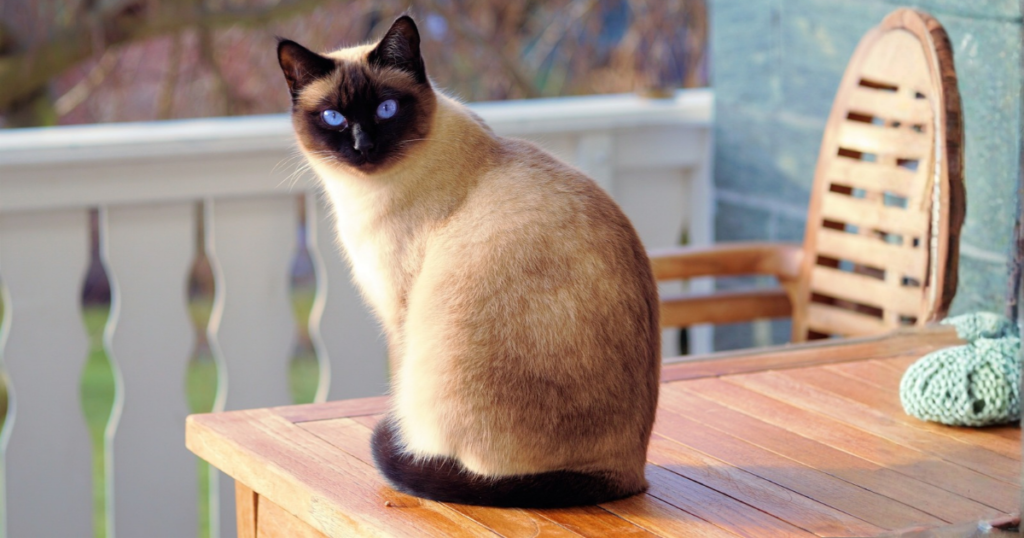
Most well documented feline hereditary conditions, from Maine Coon heart disease to Persian kidney disease, have one thing in common: a genetic test exists. Siamese amyloidosis breaks that pattern entirely, and that changes the insurance conversation more than the disease itself does.
Siamese Cat Pet Insurance: The One Risk You Can’t Test For
Amyloidosis in cats is rarely reported in scientific literature at all. That itself is a clue. UFAW’s own assessment notes this rarity likely reflects underdiagnosis rather than a genuinely rare disease, since the condition frequently isn’t identified until a post-mortem examination.
What makes Siamese cat pet insurance planning genuinely different from most other hereditary risk breed guides is not how common the disease is.
It’s that, unlike hypertrophic cardiomyopathy in Maine Coons, the fold mutation in Scottish Folds, polycystic kidney disease in Persians, or pyruvate kinase deficiency in Bengals, there is currently no genetic test that can tell you whether your Siamese carries the risk.
Why this condition is different from other well known feline genetic risks
Several other well documented hereditary feline conditions have a direct genetic test available. Hypertrophic cardiomyopathy in Maine Coons, polycystic kidney disease in Persians, and pyruvate kinase deficiency in Bengals can all be screened for directly, giving owners and breeders a concrete way to know a cat’s genetic status before symptoms ever appear.
Siamese amyloidosis stands apart specifically because no such test currently exists, despite real, active genetic research into the condition. Laying that comparison out plainly shows exactly how unusual this situation is.
Genetic testing availability for common feline hereditary conditions
This is precisely why Siamese cat pet insurance deserves a genuinely different framing than a simple “get tested first” recommendation. With no way to rule the risk in or out, the entire strategy has to rest on enrollment timing and symptom awareness instead.
What the genetic research actually shows, in more depth than most guides go
Researchers have made real progress even without a usable clinical test. A 2024 multi-locus genome-wide association study genotyped 20 affected Siamese and Oriental cats against 48 healthy controls, identifying eight significantly associated genetic markers across four chromosomal regions.
This kind of research is genuinely difficult to conduct in this specific breed, since it requires samples from cats that have died of the condition, and breeders are understandably reluctant to provide animals for necropsy. The relatively small sample size in even the most recent studies reflects that real-world constraint, not a lack of scientific interest.
The molecular detail behind the disease
Amyloidosis results from misfolded serum amyloid A (SAA) protein forming fibril deposits in tissue. Biochemical sequencing found that the Siamese variant of the resulting amyloid A protein differs from the Abyssinian breed’s variant by two specific amino acid substitutions, 46Q→R and 52A→V, one of which is a non-mammalian substitution otherwise seen only in certain bird species’ AA proteins.
The 2024 GWAS work also flagged SAA1, the gene encoding the amyloid A precursor protein, as a candidate region, the same gene implicated in hereditary AA-amyloidosis in humans. This is a genuinely active, ongoing area of veterinary genomic research, not a settled question with a simple answer.
What this means practically is that while scientists understand a great deal about why this disease happens at the molecular level, that understanding hasn’t yet translated into a screening tool breeders or owners can use, the way it has for conditions like Maine Coon HCM or Persian PKD.
Why this specific disease is so hard to catch early
Unlike Abyssinian amyloidosis, which targets the kidneys and produces more recognizable signs of kidney disease, Siamese and Oriental amyloidosis is unusual for concentrating primarily in the liver. VCA Animal Hospitals specifically calls this out as an exception to how the disease typically presents in other predisposed breeds.
Affected cats often show few or no specific symptoms until the liver is significantly compromised. Post-mortem findings typically include an enlarged, pale, fragile liver with hemorrhaging.
In the most severe presentations, spontaneous liver rupture with internal bleeding occurs. Onset is documented as early as 1 year of age, with most cases appearing before age 5, though the full documented range extends to 7 years.
What actually happens to a policy given a condition with no test
The honest insurance reality here
Since there’s no test to confirm or rule out risk, the only meaningful protection is enrolling before any symptom, however vague, appears in your cat’s medical record.
Lethargy, appetite loss, or vague digestive symptoms noted at a routine visit could later be connected to amyloidosis if it’s eventually diagnosed, and insurers can treat that earlier documentation as the start of a pre-existing condition. This makes early, proactive enrollment more important here than for breeds where a clean genetic test result offers some reassurance.
Siamese cat pet insurance and the breed’s other documented risks
Amyloidosis is the condition most guides underplay, but it isn’t the only one insurers price in for this breed.
Asthma and respiratory sensitivity
Siamese cats are frequently cited among breeds with elevated feline asthma rates, requiring ongoing management with inhaled or oral medication in more severe cases.
Progressive retinal atrophy
A hereditary, gradual deterioration of the retina that can lead to vision loss over time, distinct from the amyloidosis risk but adding to the breed’s overall genetic disease profile.
Dental disease
The breed’s narrower jaw structure contributes to earlier and more frequent dental problems, a near universal, if less dramatic, cost driver across the cat’s lifetime.
What treatment and management actually cost
| Item | Typical cost |
|---|---|
| Annual out-of-pocket cost with insurance coverage | $400 to $700 |
| Advanced treatment during an acute episode | $3,000 or more |
| Asthma management (inhaler, medication, ongoing) | $300 to $900 per year |
| Dental cleaning and extractions | $300 to $800 |
| Lifetime veterinary spend, full range across sources | $15,000 to $45,000 |
Premiums, and why the estimates genuinely disagree
Pricing sources for this breed spread out more than most, and it’s worth showing that honestly. One breed analysis puts the average at $56 a month, ranking Siamese the 26th most expensive breed. A separate cost-tier analysis places Siamese among the cheapest cat breeds, roughly 5% or more below the national average. Several other sources land between these extremes.
| Life stage | Monthly premium range |
|---|---|
| Kitten (under 1 year) | $20 to $38 |
| Young adult (1 to 4 years) | $26 to $46 |
| Middle-aged (5 to 8 years) | $36 to $60 |
| Senior (9+ years) | $55 to $90 |
The likely explanation for the spread is the same pattern we see across breed cost research generally: different sources model different ages, coverage levels, and states. Budgeting somewhere in the $27 to $56 range for a typical adult, and confirming your actual quote directly, is the more useful approach than anchoring to any single number.
How to manage this risk without a genetic test
Learn the subtle warning signs specifically. Since amyloidosis in this breed often progresses silently, knowing that unexplained lethargy, reduced appetite, or vague digestive upset in a Siamese warrants a vet visit, rather than a wait-and-see approach, genuinely matters more here than for breeds with a clear test result to fall back on.
Ask your vet about baseline bloodwork as your cat ages. While there’s no specific amyloidosis test, routine liver enzyme panels during regular checkups can sometimes flag early organ stress before a full clinical picture develops.
Consider the breeder’s own health history, even without a formal test. A breeder who can speak to whether amyloidosis has appeared in a cattery’s lineage is offering genuinely useful information, even though it isn’t a substitute for a real genetic screening result.
What to look for in a policy
- Confirm hereditary and congenital conditions are covered, not excluded by default, since amyloidosis is classified as hereditary even without an available genetic test.
- Ask how the insurer treats vague, undiagnosed symptoms documented before a formal diagnosis, since this is exactly the gray area that matters most for an untestable condition.
- Prioritize a high annual limit given that acute amyloidosis treatment can run several thousand dollars in a single episode.
- Enroll as early as possible, treating this as genuinely time sensitive rather than a someday task, since no test exists to tell you how much time you actually have.
Is Siamese cat pet insurance worth it?
Run the comparison. At $35 a month, a reasonable mid-range figure, a year of coverage costs $420. A single acute amyloidosis episode requiring advanced care can run $3,000 or more, seven times that annual premium in one event.
Given a documented breed-specific prevalence, a genuinely serious disease mechanism, and no available test to reassure you either way, enrolling a Siamese kitten in comprehensive coverage before any symptom ever appears is one of the more clearly justified early decisions for any cat breed.
This holds arguably more so than for any breed where a clean test result offers even partial peace of mind.
Frequently asked questions
Not currently. Researchers have identified candidate genetic regions, including the SAA1 gene, through genome-wide association studies, but no clinically usable screening test exists yet, unlike the tests available for Maine Coon HCM, Persian PKD, or Bengal PK deficiency.
A historical post-mortem study found 6.2% of 194 Siamese cats affected, a rate UFAW describes as markedly higher than in most other breeds, though likely underdiagnosed given the condition’s frequently silent progression until late stages.
Yes, as long as no related symptom was documented before your policy’s waiting period ended. Since there’s no test to confirm the condition in advance, early enrollment before any vague symptom appears is the only real protection.
Estimates vary unusually widely by source, from roughly $27 to $56 a month for a typical adult, with kittens starting around $20 and seniors reaching $90 or more.
Primarily the liver, which distinguishes it from Abyssinian amyloidosis, which mainly affects the kidneys. Severe cases can involve liver enlargement, hemorrhage, and in the most serious presentations, spontaneous liver rupture.
Feline asthma, progressive retinal atrophy, and dental disease tied to the breed’s narrower jaw structure are all documented risks alongside amyloidosis.
The bottom line
Siamese cats carry a genuinely unusual position among cat breeds with documented hereditary risk: a well documented, actively researched genetic liver disease that, unlike hypertrophic cardiomyopathy, polycystic kidney disease, or pyruvate kinase deficiency, still cannot be tested for directly.
That gap doesn’t make the risk smaller, if anything it makes early, proactive Siamese cat pet insurance enrollment more important, since vigilant timing is currently the only tool owners actually have.
For more on how pre-existing condition timing works generally, see our Pre-Existing Conditions guide.
If you’re comparing coverage across cat breeds, our guides on Maine Coon, Persian, and Bengal pet insurance each cover a different, well documented genetic risk. You can also get a personalized cost estimate using our calculator, or learn more about how we research every guide on our About page.
Sources
- UFAW, Siamese Amyloidosis
- Single Nucleotide Polymorphisms Associated with AA-Amyloidosis in Siamese and Oriental Shorthair Cats, PMC (2024, peer-reviewed)
- Generalized AA-amyloidosis in Siamese and Oriental Cats, ScienceDirect (peer-reviewed)
- VCA Animal Hospitals, Amyloidosis in Cats
- PetMD, Amyloidosis in Cats
Sarah researches and writes PetCoverToday's guides, checking every cost figure, coverage term, and policy rule directly against insurers' own published pages and, where relevant, veterinary and industry sources. PetCoverToday is an independent research resource, not a licensed insurance agency, and does not sell policies directly. Read more about how we research and fact-check every guide.