A routine, correctly-dosed medication put a healthy young dog in the hospital. The test that could have prevented it costs $70. Most pet insurance won’t pay for it.
Australian Shepherd Pet Insurance: The 50% Drug Danger
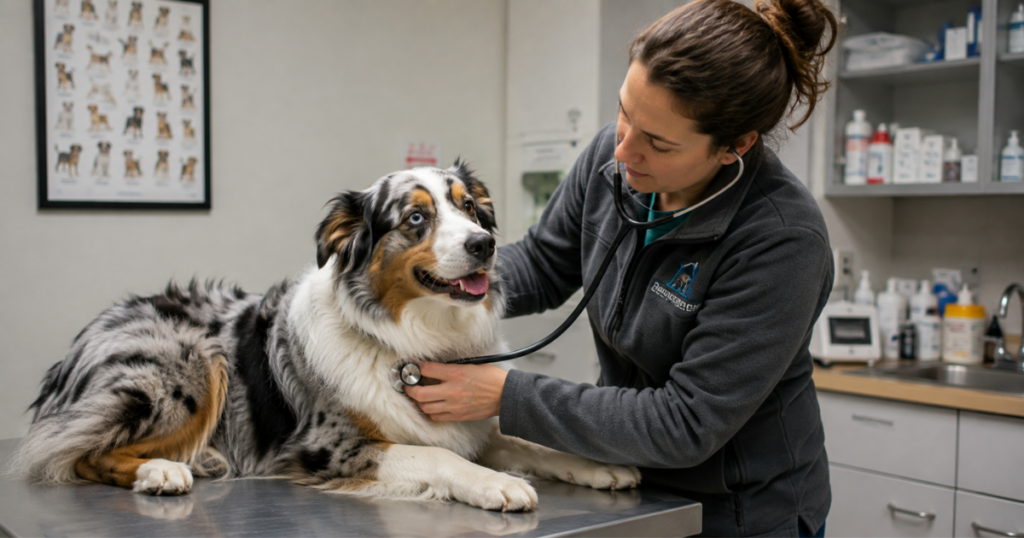
A three-year-old Australian Shepherd gets a standard, correctly measured dose of a common dewormer. Within hours, tremors set in, then agitation, then labored panting. What should have been routine ends in emergency hospitalization.
This isn’t a hypothetical. It’s a documented, peer-reviewed case, and it happened because of a gene mutation carried by roughly half the breed. The test that identifies it costs less than a vet exam. Most standard pet insurance won’t cover that test at all.
Australian Shepherd pet insurance conversations tend to focus on hip dysplasia and epilepsy, both real, both worth understanding. What gets almost no attention is a genetic mutation that turns ordinary, correctly dosed medications into a medical emergency, and a genuinely frustrating insurance gap around the one test that could stop it before it happens.
How the test actually works, step by step
Australian shepherd pet insurance planning should include this test early, and the process itself is straightforward. A vet or an at-home kit collects a cheek swab or blood sample, which is sent to a lab, most commonly Washington State University’s Veterinary Clinical Pharmacology Lab, one of the most established testing services for this specific mutation.
Results typically return within a week, categorizing the dog as clear (no copies of the mutation), carrier (one copy), or affected (two copies). Each category carries a different practical risk level.
WSU specifically offers pharmacology consulting alongside the result, meaning owners get more than just a raw genetic label, they get guidance on what it actually means for future medication decisions.
What MDR1 actually does inside a dog’s body
The MDR1 gene codes for a protein called P-glycoprotein, which normally acts as a pump at the blood-brain barrier, physically pushing certain drugs and toxins back out of the brain before they can accumulate.
In dogs with the MDR1 mutation, that pump doesn’t work properly. Drugs that would normally be kept out of the brain, or cleared quickly, build up instead, sometimes to levels that cause serious neurological toxicity.
This is why the reactions are usually described as sedation, tremors, ataxia, or in severe cases, coma, rather than the digestive or organ-specific symptoms typical of most drug reactions.
What actually determines the risk
Why the insurance gap here is genuinely frustrating
The $60 to $95 genetic test is inexpensive specifically because it’s simple, a cheek swab or blood draw processed in a lab. But because it’s classified as genetic or diagnostic screening rather than treatment for an existing illness, standard accident-and-illness policies typically don’t reimburse it.
Meanwhile, the emergency hospitalization that an undiagnosed MDR1 reaction can cause, sometimes running into thousands of dollars, is exactly the kind of sudden, unexpected event standard coverage is built to pay for. The cheap prevention isn’t covered. The expensive emergency is.
Why this matters beyond just Australian Shepherds
Mdr1 gene dog insurance considerations extend well beyond this single breed. The mutation is documented across essentially all herding breeds, Border Collies, Shetland Sheepdogs, Old English Sheepdogs, and several others, with Australian Shepherds and their miniature counterparts among the most consistently affected.
If you own any herding breed, this same testing logic applies directly, and the insurance coverage gap described here is industry-wide, not specific to one breed’s policies.
Recognizing a reaction if it happens before you know the status
Not every owner will have the test result in hand before a medication is given, especially in an emergency situation where a vet has to act quickly. Knowing what an MDR1 reaction actually looks like matters just as much as the test itself.
Watch for excessive drooling, disorientation, uncoordinated movement, tremors, and unusual sedation or lethargy that seems disproportionate to whatever medication was given. Severe cases can progress to blindness or respiratory depression. Because these signs can develop within hours of a dose, prompt veterinary attention genuinely matters, waiting to see if things improve on their own is not the right call here.
If your dog has ever had an unusual, severe reaction to a routine medication, mention it explicitly at every future vet visit, even if you’re not certain MDR1 was the cause. That history alone is valuable information for any future treatment decision.
Which medications actually carry risk
This list isn’t exhaustive, and specific risk depends on dose and individual sensitivity, but the drugs most consistently flagged in veterinary literature include:
- Ivermectin, used in some heartworm preventives, particularly at higher off-label doses
- Loperamide (the active ingredient in Imodium), a common over-the-counter anti-diarrheal
- Certain chemotherapy agents, including vincristine and doxorubicin
- Butorphanol, an opioid used for pain management and sedation
- Some anesthesia and sedation protocols, which is why disclosing MDR1 status before any surgery matters
Many standard heartworm preventives at labeled doses are considered safe even for MDR1-affected dogs, the real risk concentrates around off-label dosing, specific deworming products, and emergency situations where a vet may not have time to check a dog’s genetic history before treating.
What this actually costs, with and without knowing
| Scenario | Typical cost |
|---|---|
| MDR1 genetic test (cheek swab or blood draw) | $60 to $95 |
| Mild adverse drug reaction, outpatient monitoring | $300 to $800 |
| Moderate reaction requiring hospitalization and supportive care | $1,500 to $4,000 |
| Severe reaction requiring intensive care, ventilation support | $4,000 to $8,000+ |
The math here is genuinely stark. A test costing under $100 sits on one side of this equation, and a five-figure emergency, entirely preventable with that same test, sits on the other.
What australian shepherd insurance cost actually looks like
Pet insurance for australian shepherds generally falls in a moderate range consistent with a medium-sized, active herding breed. Budgeting between $35 and $65 a month is realistic for a standard accident-and-illness policy on an adult dog, with age, location, deductible, and annual limit all affecting the exact figure.
Aussie pet insurance purchased before any drug reaction or MDR1-related vet visit is documented remains the most reliable way to ensure a future emergency, if one happens, is actually covered as the accident it is.
Beyond MDR1, this breed also carries documented risk for hip dysplasia and certain inherited eye conditions, meaning a comprehensive policy without hereditary exclusions genuinely matters here, not just for the drug-sensitivity risk covered in depth throughout this guide.
What to actually do as an Australian Shepherd owner
- Get the MDR1 test done as early as possible, ideally at your puppy’s first vet visit, since it’s inexpensive and the result never changes once known.
- Put the result in your dog’s permanent record, and remind every new vet, groomer, or emergency clinic before any medication is given, especially anesthesia or sedation.
- Ask your insurer directly whether a wellness or preventive-care add-on covers genetic testing, since standard base policies typically don’t, but some optional add-ons do.
- Enroll in accident-and-illness coverage before any MDR1-related reaction happens, so that if an emergency does occur, it’s treated as a covered event rather than complicated by pre-existing condition questions.
Why this particular gap feels different from other insurance exclusions
Most insurance exclusions make a certain financial logic even when they’re frustrating, elective procedures, routine wellness care, cosmetic surgery. The MDR1 testing gap feels different because the test itself is diagnostic in the truest sense, it identifies a specific, known, breed-documented genetic risk before any harm occurs, using the exact same logic insurers apply when covering treatment after the fact.
An owner who tests early and discovers their dog carries the mutation has done everything right, and still pays out of pocket for that knowledge, while an owner who skips testing and ends up with an emergency room bill gets that expense reimbursed. The incentive structure genuinely runs backward from what would encourage the safest outcome for the dog.
Frequently asked questions
Generally not under standard accident-and-illness coverage, since it’s classified as genetic or diagnostic screening rather than treatment for an existing condition. Some providers offer reimbursement only through an optional wellness or preventive-care add-on, and even then, coverage varies by provider.
This is exactly the kind of detail worth asking about directly when comparing australian shepherd pet insurance options, rather than assuming the answer either way based on a general policy summary.
Yes, in most cases, since a sudden adverse drug reaction is generally treated as a covered accident or illness event under standard policies, as long as MDR1 status or a prior reaction wasn’t already documented as pre-existing before enrollment.
Approximately half of Australian Shepherds carry at least one copy of the mutation, making this one of the breed’s most widespread, if underdiscussed, genetic risks, alongside orthopedic and neurological conditions that get more routine attention.
Yes. While dogs with two copies of the mutation generally show more pronounced sensitivity, dogs with a single copy can still experience adverse reactions to certain medications, particularly at higher doses, which is part of why testing matters even if you suspect only partial risk.
Typically $35 to $65 a month for a standard accident-and-illness policy on an adult dog, depending on age, location, deductible, and the annual coverage limit you select.
The bottom line on australian shepherd pet insurance
Half of this breed carries a mutation that can turn a routine medication into a medical emergency, and the test that would prevent that emergency almost never makes it into a standard policy’s coverage.
This is a genuine gap in how pet insurance is structured, prevention isn’t rewarded the way emergency treatment is, even when prevention costs a fraction as much.
Getting the test done early, documenting the result everywhere your dog receives care, and enrolling in insurance before any reaction happens are the three things that actually change the outcome here.
For related breed risk comparisons, see our guides on Doberman pet insurance, which covers a different genetic screening gap, and Great Dane pet insurance, which covers a similar preventive-screening insurance dilemma for heart disease. You can also learn more about how we research every guide on our About page.
Sources
- Washington State University, Washington Animal Disease Diagnostic Laboratory, MDR1 Test Pricing
- VCA Animal Hospitals, Multidrug Resistance Mutation (MDR1)
- Royal Kennel Club, DNA Test: MDR1 (Multiple Drug Sensitivity)
- MetLife Pet Insurance, Dog DNA Tests: Costs, Coverage, and More
- Peer-reviewed clinical case report, MDR1-associated drug toxicity following standard-dose treatment, published veterinary case literature
Sarah researches and writes PetCoverToday's guides, checking every cost figure, coverage term, and policy rule directly against insurers' own published pages and, where relevant, veterinary and industry sources. PetCoverToday is an independent research resource, not a licensed insurance agency, and does not sell policies directly. Read more about how we research and fact-check every guide.