
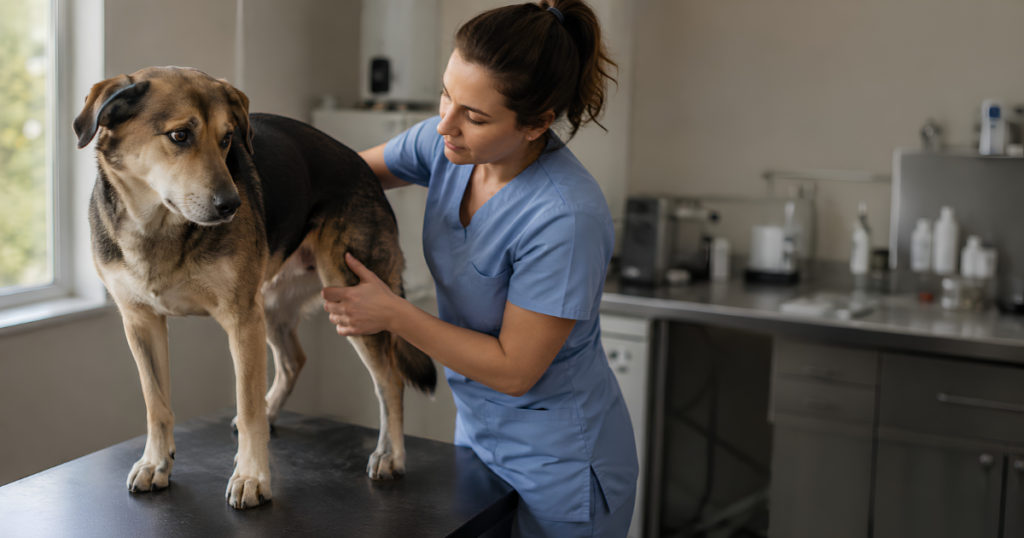
Hip dysplasia is the most common orthopedic disease in medium and large breed dogs, and one of the most misunderstood when it comes to insurance coverage. Here is exactly how waiting periods, bilateral exclusions, and breed limits actually work.
Does Pet Insurance Cover Hip Dysplasia?
Quick answer
Yes, most standard accident and illness pet insurance policies cover hip dysplasia, but only if it is not pre-existing and only after you clear the policy’s waiting period.
The catch is that hip dysplasia is usually treated as an orthopedic condition, which often carries a longer waiting period than a typical illness, sometimes 6 months instead of the usual 14 days.
Some insurers also apply a bilateral exclusion, breed restrictions, or an age cutoff for enrollment, so pet insurance hip dysplasia coverage varies more between providers than most other conditions.
If your dog is a breed with a known predisposition, or you are trying to insure a puppy before anything shows up on a vet record, the fine print here matters more than the headline answer.
This guide breaks down what actually gets covered, what commonly gets denied, and how to structure a policy so hip dysplasia is genuinely protected rather than technically excluded.
Key takeaways
- Pet insurance hip dysplasia coverage is usually available, but the waiting period is the real gatekeeper. Providers like Embrace and Fetch apply a 6 month orthopedic waiting period, well beyond the standard 14 day illness wait most people expect.
- Bilateral exclusions catch owners off guard. If one hip is diagnosed before or during your waiting period, many insurers will exclude the other hip too, even if it is perfectly healthy at the time.
- Some insurers exclude coverage entirely based on age or breed. Healthy Paws and ManyPets exclude hip dysplasia for pets enrolled at age 6 or older, regardless of symptoms.
- MetLife stands out for not applying an extended orthopedic wait, using its standard 14 day illness waiting period for hip dysplasia instead of a separate 6 month clock.
- Accident-only policies never cover hip dysplasia, since it is classified as a genetic, developmental condition rather than an accident.
What hip dysplasia is and which breeds face the highest risk
Hip dysplasia is a developmental condition where the ball and socket of the hip joint do not fit together properly. The joint appears normal at birth but develops abnormally as the dog grows, creating looseness that leads to abnormal wear, inflammation, and eventually osteoarthritis.
It is the most common orthopedic disease in medium, large, and giant breed dogs, though a handful of smaller breeds are affected at surprisingly high rates too.
According to Orthopedic Foundation for Animals screening data, prevalence varies enormously by breed, from under 5% in breeds like the Siberian Husky up to over 70% in others. Some of the most consistently cited figures include German Shepherds at roughly 19 to 20%, Labrador Retrievers around 12%, and Rottweilers near 17% in recent OFA cohort data.
At the extreme end, English Bulldogs and Pugs show some of the highest recorded rates of any breed, over 60 to 70% in OFA’s published screening results, largely due to their body structure rather than working-breed genetics.
Why this matters for pet insurance hip dysplasia coverage specifically
Because hip dysplasia is developmental and largely hereditary, insurers treat it differently from a random accident or infection. It is far more predictable at the breed level, which is exactly why so many providers build in longer waiting periods, breed-based restrictions, or bilateral clauses specifically for this condition rather than relying on their standard illness rules.
What hip dysplasia treatment actually costs without insurance
Understanding pet insurance hip dysplasia coverage starts with knowing what you are actually protecting against. Cost depends heavily on the dog’s age, size, and how advanced the joint damage is by the time it is diagnosed.
| Treatment | Typical cost range |
|---|---|
| Conservative management (medication, weight control, physical therapy) | $150 to $2,500 |
| Juvenile pubic symphysiodesis (JPS), puppies under 20 weeks | Lower cost, preventive only |
| Double or triple pelvic osteotomy (DPO/TPO), both hips | $3,000 to $6,000 |
| Femoral head ostectomy (FHO), per hip | $1,200 to $3,500 |
| Total hip replacement (THR), per hip | $4,500 to $7,000+ |
| All in cost including diagnosis, surgery, and aftercare | $4,000 to $14,500 |
Treating both hips roughly doubles the surgical cost, though some clinics offer a modest discount on the second procedure. Given how wide this range is, the difference between a policy that actually pays out and one that technically excludes the claim is often the difference between a manageable bill and a five figure one.
How pet insurance actually handles hip dysplasia
This is where pet insurance hip dysplasia coverage gets more complicated than most other conditions, and where reading the actual policy wording matters.
The orthopedic waiting period
Most standard illness claims only require a 14 to 30 day waiting period after your policy starts. Hip dysplasia is frequently treated as a separate category. Embrace and Fetch, for example, apply a 6 month orthopedic waiting period specifically for conditions like hip dysplasia and cruciate ligament injuries.
If your dog shows any sign of stiffness, limping, or joint pain during that window, it will likely be classified as pre-existing and permanently excluded, even though your policy was technically active the whole time.
The bilateral exclusion
Hip dysplasia commonly affects both hips, since the same developmental and genetic factors apply to both joints. Many insurers use this to justify a bilateral exclusion clause: if one hip is diagnosed as pre-existing, the other hip can be excluded too, even if it shows no signs of a problem at the time.
This is one of the more frustrating quirks in pet insurance generally, and it applies with particular force to hip dysplasia given how often the condition is symmetrical to begin with.
Breed and age restrictions
Some insurers apply restrictions that have nothing to do with your specific dog’s health history. Healthy Paws and ManyPets, for instance, exclude hip dysplasia coverage for pets enrolled at age 6 or older, regardless of whether any symptoms exist.
Coverage approaches for specific breeds also vary by provider and have changed over time, so it is worth confirming the current policy language directly rather than assuming a provider’s general reputation applies to your specific breed.
Accident-only plans never apply here
Accident-only policies are cheaper precisely because they exclude illnesses and developmental conditions. Since hip dysplasia is classified as a hereditary, developmental condition rather than an accident, no accident-only plan will ever cover it, regardless of enrollment timing.
Comparing providers on pet insurance hip dysplasia coverage
| Provider | Orthopedic waiting period | Notable details |
|---|---|---|
| MetLife | 14 days (standard illness wait, no extension) | Covers all breeds without hip dysplasia breed exclusions |
| Spot | 14 days | Up to 90% reimbursement, unlimited annual limit option available |
| Embrace | 6 months | Extended wait applies specifically to orthopedic conditions |
| Fetch | 6 months | Same 6 month orthopedic category as Embrace |
| Healthy Paws | Standard, but age restricted | Excludes hip dysplasia for pets enrolled at age 6 or older |
| ManyPets | Standard, but age restricted | Same age 6 or older exclusion as Healthy Paws |
| Nationwide | Varies by plan | Coverage approach has been described inconsistently across sources; confirm current terms directly |
Always confirm current waiting periods and exclusions directly with the provider before buying, since policy language is updated periodically and can vary by state.
A concrete example of how the bilateral clause plays out: if your dog’s left hip is diagnosed with dysplasia during your policy’s waiting period, and the right hip develops the same issue a year later, many policies will deny the right hip claim too, treating it as an extension of the same pre-existing condition rather than a new, unrelated diagnosis.
How to make sure pet insurance hip dysplasia coverage actually applies
- Enroll before any symptoms appear, ideally as a puppy. Since hip dysplasia can develop gradually, the earlier you insure, the less likely any early stiffness or gait change has already been noted in a vet record.
- Check the orthopedic waiting period specifically, not just the general illness waiting period. A 6 month wait changes your practical enrollment timeline significantly compared to 14 days.
- Read the bilateral exclusion clause before buying, not after a claim is denied. Some providers apply it more broadly than others.
- Ask directly whether your specific breed carries any restriction, since this detail is not always obvious from a provider’s marketing page and can change over time.
- Consider an orthopedic rider if your provider offers one. Some insurers sell an add-on specifically for joint and ligament conditions, which can be worth the extra monthly cost for breeds at elevated risk.
Is pet insurance hip dysplasia coverage worth it?
Consider a realistic scenario. A dog that needs a total hip replacement on one side faces a bill of roughly $4,500 to $7,000, and a bilateral case can run considerably higher once diagnosis, anesthesia, and rehabilitation are included.
Against that, a typical accident and illness premium runs somewhere in the $40 to $90 a month range depending on the breed and provider. For a breed with a documented 15 to 20% or higher prevalence, the expected value of coverage is difficult to ignore, provided the policy was purchased early enough to actually apply.
The practical takeaway
Pet insurance hip dysplasia coverage is genuinely valuable, but only if the policy is in place well before any symptoms appear. Buying a policy after your dog is already limping is buying paperwork, not protection, since the condition will almost certainly be classified as pre-existing.
Frequently asked questions
Yes, pet insurance hip dysplasia coverage applies in most cases, as long as the condition is not pre-existing and you have cleared the applicable waiting period, including any extended orthopedic wait. Coverage typically includes diagnostic imaging, the surgery itself, and post-operative rehabilitation under a standard accident and illness plan.
It depends on the provider. Some, like MetLife, use their standard 14 day illness waiting period. Others, like Embrace and Fetch, apply a separate 6 month orthopedic waiting period specifically for conditions like hip dysplasia.
A bilateral exclusion means that if one side of a paired joint, like a hip, is diagnosed as pre-existing, the other side can be excluded too, even if it shows no symptoms at the time. This applies with particular force to hip dysplasia since the condition frequently affects both hips.
Yes, you can still purchase a policy, but the existing hip dysplasia diagnosis will be treated as a pre-existing condition and excluded from coverage. Every other new, unrelated accident or illness would still be covered under a standard policy.
No. Some insurers apply age-based restrictions rather than breed-based ones, such as excluding hip dysplasia coverage for pets enrolled at 6 or older. Breed-specific policy language also varies by provider and can change over time, so it is worth confirming directly rather than assuming.
As early as possible, ideally as a puppy before any joint stiffness, limping, or gait changes have been recorded anywhere. Because hip dysplasia often carries an extended orthopedic waiting period on top of the usual illness wait, enrolling early is the only reliable way to ensure the condition is actually covered if it develops later.
The bottom line
Pet insurance hip dysplasia coverage is real and valuable, but it comes with more moving parts than most other conditions: an often extended orthopedic waiting period, a bilateral exclusion that can knock out coverage for a perfectly healthy joint, and in some cases outright age restrictions.
None of that makes coverage a bad idea, especially for a breed with documented risk, it just means the timing of enrollment and the fine print of the policy matter more here than almost anywhere else in pet insurance.
If your dog’s breed carries elevated risk for this condition, our German Shepherd pet insurance guide and Golden Retriever pet insurance guide both cover hip dysplasia as part of a broader breed risk profile.
If your pet already has a diagnosed condition of any kind, our guide on pet insurance and pre-existing conditions explains how that affects coverage more broadly, and our Dachshund pet insurance guide and French Bulldog pet insurance guide cover two very different breed-specific risk profiles. You can also learn more about how we research every guide on our About page.
Sources
- Diagnosis, Prevention, and Management of Canine Hip Dysplasia: A Review, PMC
- Recent OFA Hip Dysplasia Data, dvm360
- Dog Hip Dysplasia Risk Calculator, OFA Breed Data
- Vety, How Much Does Hip Dysplasia Surgery Cost (2026)
- Insurify, Does Pet Insurance Cover Hip Dysplasia
- MetLife Pet Insurance, Hip Dysplasia Coverage
- Spot Pet Insurance, Hip Dysplasia Coverage Guide (2026)
Sarah researches and writes PetCoverToday's guides, checking every cost figure, coverage term, and policy rule directly against insurers' own published pages and, where relevant, veterinary and industry sources. PetCoverToday is an independent research resource, not a licensed insurance agency, and does not sell policies directly. Read more about how we research and fact-check every guide.