
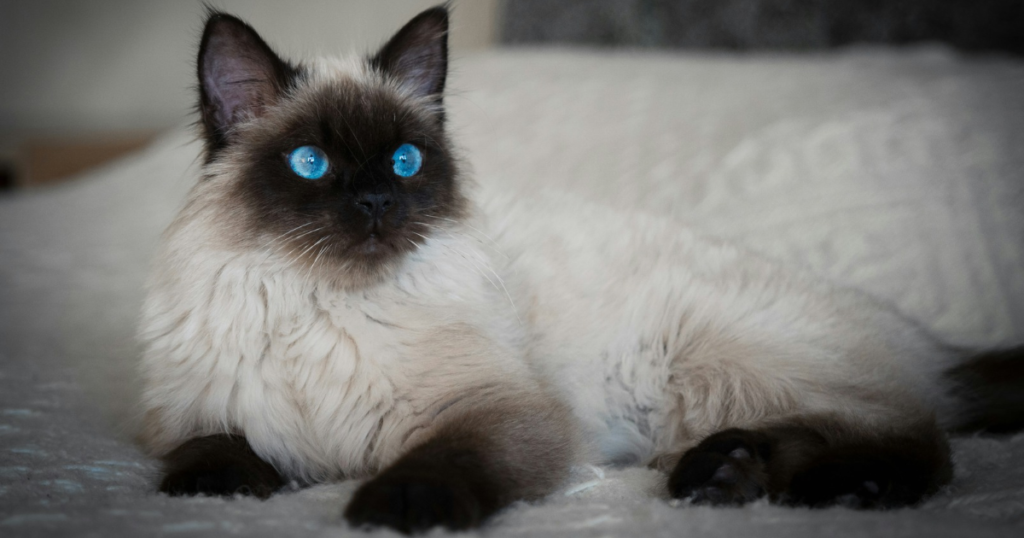
Ragdolls carry four separate documented health risks that most breed guides mention in passing. Here’s what peer-reviewed veterinary research actually says about each one, and what it means for insurance timing.
Ragdoll Pet Insurance: What the Research Actually Shows
Ragdolls are bred for a temperament so relaxed the breed is named for it, cats that go limp with pleasure when picked up. That same docility, combined with a genetic background concentrated in a relatively small founding population, has left the breed with a cluster of documented health risks that go well beyond the single heart condition most articles mention.
Peer-reviewed veterinary research has independently confirmed at least four distinct conditions where Ragdolls carry statistically elevated risk, and understanding all four, not just the famous one, changes how you should think about Ragdoll pet insurance timing.
Key takeaways
- HCM is the headline risk, but not the only one. Ragdolls also carry documented elevated risk for FIP, bladder stones, and a rare condition called GESF where the breed makes up an outsized share of diagnosed cases.
- A 2005 peer-reviewed study found Ragdolls among six breeds with statistically significant elevated FIP risk, the earliest research to name specific breeds rather than just purebred status generally.
- The breed’s docile temperament is itself a risk factor. Ragdolls are commonly described as unable to defend themselves outdoors, which is why most breed-specific care guides recommend strictly indoor living, a detail that connects directly to accident risk and insurance value.
- Enrollment timing matters even more here than for single-condition breeds, since four separate conditions each have their own window before symptoms can trigger a pre-existing exclusion.
The four documented health risks, and what the research actually says
Why HCM gets the most attention
Hypertrophic cardiomyopathy is the most common heart disease in cats generally, but breed-specific research consistently places Ragdolls among the higher-risk breeds. UFAW’s own summary states that approximately 30% of Ragdolls carry the R820W mutation in the MYBPC3 gene associated with the disease, while other sources cite a broader 13% to 30% range depending on the population studied.
The disease causes the heart’s left ventricular wall to thicken abnormally, reducing pumping efficiency, and it frequently develops with no outward symptoms until the disease is advanced.
Diagnosis requires echocardiography, typically $300 to $800 per screening depending on whether a general practitioner or a veterinary cardiologist performs it, and cats with a confirmed diagnosis often need ongoing medication and monitoring costing $1,000 to $3,000 a year.
What the FIP research actually found
A 2005 study published in the Journal of Feline Medicine and Surgery examined cats diagnosed with FIP against the general pedigree and mixed-breed cat population at a North Carolina veterinary teaching hospital. The prevalence of FIP was 1.3% in purebred cats compared to just 0.35% in mixed-breed cats, a statistically significant 4.5-times higher risk.
Ragdolls appeared among six breeds, alongside Abyssinian, Bengal, Birman, Himalayan, and Rex, with significantly elevated risk.
A separate 2012 Australian study of 382 confirmed FIP cases confirmed the broader pattern that purebred cats face elevated FIP risk, and specifically cited the earlier North Carolina findings on Ragdolls as background.
The Australian study’s own newly overrepresented breeds in its dataset were British Shorthair, Devon Rex, and Abyssinian, worth noting honestly rather than implying it independently re-confirmed every breed from the original study.
FIP has historically been fatal in nearly all cases, though newer antiviral treatments introduced in recent years have meaningfully improved survival odds when caught early, at a treatment cost that can run into the thousands of dollars.
Bladder stones: the emergency most owners underestimate
Urinary blockages are one of the few true feline emergencies where hours matter. In male cats specifically, the urethra is narrow enough that a stone can cause a complete blockage, leading to an overfull bladder that can rupture without prompt surgery.
A cystotomy, the surgical procedure to remove bladder stones, typically costs $1,000 to $3,000, and the full picture including diagnostics, hospitalization, and follow-up care can reach $1,500 to $5,000 or more.
GESF: the condition almost no one talks about
Gastrointestinal eosinophilic sclerosing fibroplasia is rare enough that most cat owners have never heard of it, which is exactly why it’s worth flagging here.
A 2024 case series published in the Journal of Veterinary Internal Medicine, examining 60 confirmed cats, found Ragdolls represented 25% of diagnosed cases, a remarkable concentration for a condition affecting the gastrointestinal tract, mesentery, and abdominal lymph nodes.
An earlier, smaller 2015 case series found an even higher concentration, 7 of 13 cats. Researchers have noted this breed’s overrepresentation mirrors its overrepresentation in FIP cases, suggesting a possible shared genetic susceptibility to eosinophilic inflammatory responses that hasn’t yet been fully explained.
What all of this actually costs without insurance
| Condition or procedure | Typical cost |
|---|---|
| HCM echocardiogram screening | $300 to $800 per visit |
| HCM ongoing medication and monitoring | $1,000 to $3,000 per year |
| Bladder stone surgery (cystotomy) | $1,000 to $3,000 |
| Full urinary blockage treatment (diagnostics, surgery, follow-up) | $1,500 to $5,000+ |
| Dental procedures under anesthesia | $300 to $700 |
| FIP antiviral treatment course | Can run into the thousands, varies by protocol and duration |
Written premiums for pet insurance in North America surpassed $4 billion in 2024, yet NAPHIA’s own data suggests only a small fraction of cats in the U.S. are currently insured. For a breed carrying four separate documented risk categories, that low insurance rate represents a lot of exposed financial risk that Ragdoll pet insurance is specifically designed to address.
What Ragdoll pet insurance costs by life stage
A $250 annual deductible paired with 90% reimbursement is the most common configuration among cat owners, and represents a reasonable balance between premium cost and real protection for this breed’s risk profile.
The math worth sitting with
A Ragdoll kitten insured at roughly $25 a month costs $300 a year in premiums. A single HCM echocardiogram already costs more than that, and a bladder stone surgery costs roughly ten times that annual premium total.
For a breed carrying four documented risk categories rather than one, the case for early Ragdoll pet insurance enrollment is arguably stronger here than for almost any other cat breed.
Why the breed’s temperament is itself an insurance-relevant fact
This is a detail most breed guides mention as a personality quirk rather than connecting it to actual risk. Ragdolls are bred specifically for a docile, trusting temperament, cats that famously go limp when held.
Multiple breed-care resources note this same trait means Ragdolls generally cannot defend themselves if they encounter danger outdoors, which is why indoor-only living is consistently recommended for the breed, not just as a preference but as a genuine safety measure.
An indoor-only Ragdoll faces meaningfully lower accident and trauma risk than a breed with typical self-preservation instincts allowed to roam, which is worth factoring in if you’re weighing accident-only versus comprehensive coverage.
Comparing providers for Ragdoll owners
| Provider | Starting price | Notable for Ragdolls |
|---|---|---|
| Lemonade | From around $12 to $15/month | Frequently cited among top-rated options specifically for the breed |
| AKC Pet Insurance | Varies by plan | Consistently recommended for Ragdoll-specific coverage |
| Rainwalk | Varies by plan | Competitive breed-specific rates noted in independent comparisons |
| Trupanion | ~$29/month average for cats | Per-condition lifetime deductible model suits a breed with multiple distinct risk categories |
Always confirm current terms directly with the provider, and specifically ask how each condition, HCM, FIP, urinary issues, is classified and whether any breed-specific exclusions apply.
What to check before buying, given this breed’s specific risk profile
- Confirm hereditary and congenital conditions are covered, not just accidents, since HCM and the breed’s other major risks are illness-classified, not accident-classified.
- Ask specifically about FIP coverage terms. This is a condition many owners never think to ask about directly, despite the documented breed-specific risk.
- Check the urinary and bladder stone waiting period, since this is a genuine emergency risk category for the breed.
- Enroll before any cardiac screening beyond a routine kitten wellness exam, for the same reason we cover in our Maine Coon pet insurance guide: an early echocardiogram finding, even an ambiguous one, could complicate future HCM coverage if documented before a policy is in place.
- Consider indoor-only status when weighing accident-only versus comprehensive coverage, since a strictly indoor Ragdoll’s accident risk profile looks different from an outdoor cat’s, though illness coverage remains essential regardless given this breed’s specific disease risks.
Frequently asked questions
Yes, according to peer-reviewed research. A 2005 study found purebred cats overall at 4.5 times higher risk than mixed-breed cats, with Ragdolls specifically among six breeds showing statistically significant elevated risk in that study’s data.
Hypertrophic cardiomyopathy is the most frequently cited health concern in the breed. UFAW cites approximately 30% of Ragdolls carrying the associated genetic mutation, among the higher rates documented in any cat breed. Regular echocardiogram screening is commonly recommended starting in early adulthood.
Yes, as long as the cat is enrolled and the condition develops after the waiting period, with no prior symptoms on record. Once diagnosed, bladder stones become a pre-existing condition and are excluded from future coverage, including any recurrence.
GESF, or gastrointestinal eosinophilic sclerosing fibroplasia, is a rare but serious inflammatory condition. A 2024 case series of 60 cats found Ragdolls represented 25% of diagnosed cases, making it worth mentioning to your vet if your Ragdoll shows unexplained gastrointestinal symptoms or a mass.
Most breed-specific care guidance recommends it, largely because the breed’s docile, trusting temperament means Ragdolls generally lack the self-preservation instincts to avoid danger outdoors. This is worth factoring into both general care decisions and how you think about accident risk when choosing a policy.
Estimates vary by source and life stage, roughly $18 to $32 a month for kittens, rising to $55 to $95 a month for seniors, with location, deductible, and reimbursement level all affecting the final quote.
The bottom line
Ragdolls carry a genuinely unusual concentration of documented health risk for a single breed, spanning the heart, the urinary tract, the immune system’s response to a common virus, and a rare gastrointestinal condition most owners have never heard of.
That’s not a reason to avoid the breed, Ragdolls remain beloved companion cats for good reason, but it is a strong argument for enrolling in Ragdoll pet insurance early, before any of these four categories has a chance to show even an ambiguous symptom on a vet record.
For more on how heart disease coverage works across breeds, see our Maine Coon pet insurance guide, or read how pre-existing condition rules apply across providers.
If you’re comparing coverage across cat breeds, our guides on Scottish Fold, Persian, and Bengal pet insurance each cover a different, well documented genetic risk. You can also get a personalized cost estimate using our calculator, or learn more about how we research every guide on our About page.
Sources
- Journal of Feline Medicine and Surgery, Prevalence of FIP in Specific Cat Breeds (2005, peer-reviewed)
- Journal of Feline Medicine and Surgery, Risk Factors for FIP in Australian Cats (2012, peer-reviewed)
- Journal of Veterinary Internal Medicine, Findings in 60 Cats with GESF (2024, peer-reviewed)
- UFAW, Ragdoll Hypertrophic Cardiomyopathy
- UC Davis Veterinary Genetics Laboratory, HCM in Ragdolls
Sarah researches and writes PetCoverToday's guides, checking every cost figure, coverage term, and policy rule directly against insurers' own published pages and, where relevant, veterinary and industry sources. PetCoverToday is an independent research resource, not a licensed insurance agency, and does not sell policies directly. Read more about how we research and fact-check every guide.