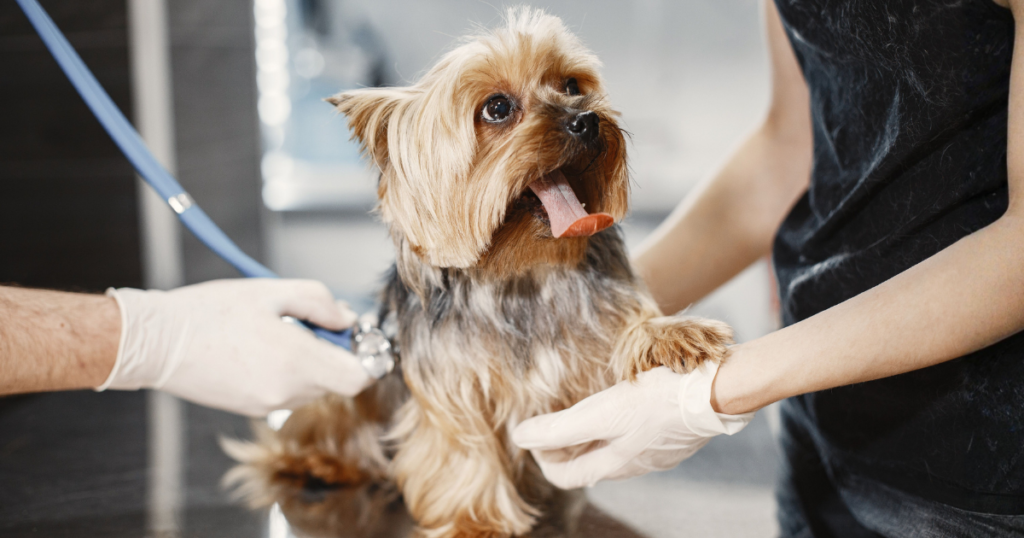
A Yorkie can be born with a liver shunt and still qualify for treatment coverage. The difficult part is understanding when symptoms began, what the policy excludes, and why a diagnosis date alone rarely tells the whole story.
An eight-week-old Yorkshire Terrier puppy arrives home looking bright, playful and healthy. A month later, the owner notices that the puppy sometimes stares into space after meals. Then comes an episode of stumbling and confusion. The veterinarian recommends blood tests and further investigation for a possible congenital portosystemic shunt.
This is an illustrative scenario, not a real insurance claim. It raises two separate questions: what does the puppy need medically, and what would an insurance company consider pre-existing? The answer to the second question may depend on when the first signs appeared, even if the actual diagnosis came much later.
Yorkshire Terrier pet insurance is often discussed in terms of small-dog dental bills, luxating kneecaps and tracheal problems. Those risks deserve attention. But congenital portosystemic shunts introduce a particularly difficult insurance question: how can a condition present from birth be eligible for a policy purchased after birth?
The answer is not simply “enroll before diagnosis.” Insurers can consider symptoms, previous examinations, medical records, waiting periods and specific congenital-condition exclusions. For a Yorkie owner, knowing that distinction can make the difference between buying a policy with realistic expectations and discovering a major exclusion after an expensive veterinary referral.
What a Liver Shunt Actually Does to a Yorkshire Terrier
Blood from the digestive tract normally passes through the liver before returning to general circulation. The liver processes nutrients, removes many toxins and performs essential metabolic work. A portosystemic shunt creates an abnormal route that allows some of that blood to bypass the liver.
In a puppy with a significant shunt, the liver may remain underdeveloped because it receives less blood than it should. Substances that would normally be processed by the liver can reach the brain. This can produce hepatic encephalopathy, a neurological complication that helps explain why some affected dogs appear confused, disoriented or unsteady rather than simply looking like they have a digestive problem.
The severity varies. Some dogs show poor growth, gastrointestinal upset or urinary problems; others develop episodes of neurological dysfunction. A mild or intermittent presentation can be easy to mistake for an unrelated puppy problem. The American College of Veterinary Surgeons (ACVS) provides an overview of diagnosis and treatment.
Why Yorkshire Terriers Are a Breed Worth Watching
Yorkshire Terriers have a documented predisposition to congenital portosystemic shunts. A 2003 study examining 2,400 canine cases from 1980 to 2002 reported that Yorkshire Terriers accounted for the largest number of diagnoses among the breeds studied. The proportion diagnosed within the study population was approximately 2.9% for Yorkies.
That figure is meaningful, but it is not the same as saying that 2.9% of all Yorkshire Terriers born today will develop a shunt. The study drew on veterinary teaching-hospital data, where complex cases can be overrepresented. Read the original study abstract.
A newer study published in 2026 examined records for 11,061 Yorkshire Terriers at one veterinary hospital. Researchers identified 93 dogs with congenital portosystemic shunts (0.8%), 739 with severe tracheal collapse syndrome (6.7%), and six dogs with both diagnoses. The median age at shunt diagnosis was 2.7 years in that hospital population.
This is an important correction to the common assumption that shunts are always diagnosed in the first year of life. Many cases do appear in young dogs, but age at diagnosis varies considerably. The two studies also used different populations and methods, so their percentages should not be treated as a direct increase or decrease in breed risk. 2026 Journal of Veterinary Internal Medicine study.
What These Numbers Mean for an Owner
The research establishes that liver shunts deserve attention in Yorkshire Terriers. It does not justify assuming your puppy has a shunt, predicting an individual dog’s lifetime risk from one hospital sample, or purchasing insurance based on a single percentage. Use the evidence to ask better questions about coverage and veterinary care.
Extrahepatic and Intrahepatic Shunts: Why Anatomy Matters
Congenital shunts are commonly divided into extrahepatic and intrahepatic types. An extrahepatic shunt travels outside the liver; an intrahepatic shunt runs within the liver. Small-breed dogs, including Yorkshire Terriers, are more commonly associated with extrahepatic shunts, while intrahepatic shunts are more frequently encountered in certain larger breeds.
That distinction affects surgical planning. A single extrahepatic vessel may be suitable for gradual surgical attenuation, allowing blood flow through the liver to increase over time. An intrahepatic shunt may require a different technique or specialist intervention. The choice depends on imaging, vascular anatomy, liver development and the dog’s condition—not simply breed or body weight.
The original article cited a 61–94% range for extrahepatic shunts in small breeds. Rather than presenting that broad range as a precise Yorkshire Terrier probability, the clinically useful conclusion is that extrahepatic anatomy is common in small breeds, but each dog’s shunt must be mapped individually. A favorable anatomical pattern does not guarantee an uncomplicated operation or complete recovery.
Warning Signs Owners Should Never Ignore
Shunt symptoms can be intermittent, which makes them difficult to recognize. A puppy might behave normally during one part of the day and seem strangely subdued or uncoordinated later. Some dogs become noticeably worse after eating, although a meal-related pattern is not present in every case.
- Poor growth: the puppy remains noticeably smaller or fails to gain weight as expected.
- Changes in awareness: confusion, staring, unusual sleepiness or apparent disorientation.
- Neurological signs: circling, unsteady walking, head pressing, seizures or temporary visual disturbances.
- Digestive problems: intermittent vomiting, diarrhea or reduced appetite.
- Urinary problems: abnormal urination or signs associated with certain urinary stones.
These symptoms have several possible causes, including conditions unrelated to the liver. A veterinarian must determine what is happening. Seizures, head pressing, collapse or marked confusion require urgent veterinary attention. Do not wait for an insurance policy to become active or delay an examination to preserve possible coverage.
Medical Care Comes Before Insurance Timing
If your Yorkshire Terrier shows concerning symptoms, contact a veterinarian promptly. Do not postpone testing, treatment or a wellness examination because you worry a medical record might affect insurance. Accurate records protect the dog’s care and are necessary for an honest insurance assessment.
Congenital Does Not Always Mean Pre-Existing
This is the central distinction in Yorkshire Terrier liver-shunt coverage. Congenital describes when a condition originated: it was present at birth. Pre-existing is an insurance classification determined under a particular policy’s terms. They are not interchangeable labels.
Fetch states that its coverage can include hereditary and congenital conditions when the pet was enrolled before signs or symptoms appeared, subject to policy terms. MetLife similarly explains that congenital conditions may be eligible under accident-and-illness coverage if they are not classified as pre-existing. Neither statement is a blanket promise that every Yorkie’s shunt surgery will be reimbursed.
Insurers may examine earlier observations, medical notes, laboratory findings and the relevant waiting period. A puppy could receive a formal diagnosis after coverage begins but still have symptoms documented beforehand. Conversely, the mere fact that a disease has a congenital origin does not necessarily make it excluded under every plan.
The Congenital Timing Rule, Explained
Three Yorkshire Terrier Insurance Timelines
Consider three fictional puppies. These examples illustrate how policy review works; they are not actual claims or guarantees of reimbursement.
| Timeline | Medical history | Insurance question |
|---|---|---|
| Puppy A Policy active before symptoms |
Normal early examinations. New signs arise after the applicable waiting period. | Potentially eligible if congenital treatment is included and all other policy terms are met. |
| Puppy B Symptoms before enrollment |
Owner reports unusual circling before buying the policy. Shunt diagnosed later. | Earlier signs may make the condition pre-existing even without an earlier diagnosis. |
| Puppy C Signs during waiting period |
Policy purchased, but neurological signs begin before illness coverage starts. | May be excluded under waiting-period and pre-existing-condition provisions. |
Notice that the condition’s congenital origin is the same in all three scenarios. What changes is the documented medical timeline and the contract governing each claim. Also remember that insurers can apply additional exclusions, benefit limits or state-specific terms.
What Fetch and MetLife Say About Congenital Coverage
Published insurer explanations are useful starting points, but the sample policy for your state is more important than a marketing summary. These examples show why broad claims such as “all congenital conditions are excluded” or “all liver shunts are covered” are unreliable.
| Provider | Published guidance | What to confirm |
|---|---|---|
| Fetch | States that hereditary and congenital conditions can be covered when no signs or symptoms occurred before enrollment or during relevant waiting periods. | Current state policy, illness waiting period, records review and whether shunt-related charges are eligible. |
| MetLife Pet | States that accident-and-illness plans can typically cover hereditary and congenital conditions when they are not pre-existing under the policy. | Policy definition of pre-existing, congenital exclusions, deductible and reimbursement terms. |
Sources: Fetch hereditary and congenital coverage and MetLife pre-existing conditions guidance. These are examples, not endorsements or a complete comparison of every insurer.
Ask This Before You Buy
“If my Yorkshire Terrier has a congenital portosystemic shunt that has never caused symptoms or abnormal findings before enrollment, is later diagnosis and treatment eligible after the waiting period? Are there breed-specific, congenital, hereditary or liver-related exclusions?”
Ask the insurer to identify the relevant policy provision. Keep the written reply and the policy documents, but remember that a future claim will still be evaluated against the actual contract and medical records.
How Veterinarians Diagnose a Liver Shunt
A veterinarian may begin with the dog’s history, physical examination, bloodwork and urine testing. Findings can suggest impaired liver function, but routine blood tests alone do not always identify the anatomy or confirm a specific shunt. Bile-acid testing and other diagnostic approaches may help determine whether additional investigation is needed.
Advanced imaging is often necessary to locate an abnormal vessel and plan treatment. Depending on the case and specialist, this may involve ultrasound, CT angiography or other imaging techniques. A referral center may recommend further testing if the first investigation is inconclusive.
This sequence matters financially because an insurance claim may involve multiple separate bills: the initial examination, laboratory work, referral consultation, imaging, anesthesia, surgery, hospitalization and follow-up. A plan that covers surgery but excludes examination fees or certain diagnostic charges may leave a larger owner contribution than expected.
What Liver Shunt Surgery Involves
For a suitable single congenital shunt, surgery often aims to reduce blood flow through the abnormal vessel so more blood can reach the liver. Surgeons may use gradual attenuation techniques such as an ameroid constrictor or cellophane band, depending on anatomy and clinical judgment.
The goal is not simply to close a vessel as tightly as possible. Sudden complete closure can produce dangerous portal hypertension if the liver’s circulation cannot tolerate the change. This is why experienced surgical assessment, monitoring and the method of attenuation are important.
ACVS describes potentially serious postoperative complications, including portal hypertension and seizures. Some complications are uncommon but can be life-threatening, especially in small dogs. Surgery can offer an excellent prognosis in appropriately selected patients, but recovery is not automatic and some dogs require further treatment or investigation.
Read the ACVS surgical overview for the medical context behind these decisions.
Diagnosis and Surgery Costs: How to Budget Without Guessing
The original article listed fixed “typical” ranges for blood tests, imaging and surgery. Those amounts may resemble some real veterinary estimates, but without a defined location, hospital type, date and billing scope, they should not be presented as verified national averages.
Instead, use the following breakdown to understand what a written estimate should include. Ask your veterinary hospital for current prices in your area.
| Expense | Why it may be needed | What to ask |
|---|---|---|
| Initial examination and laboratory tests | Assess symptoms, liver function and other possible causes. | Are examination fees and diagnostic tests eligible under the policy? |
| Specialist consultation and imaging | Confirm anatomy and determine whether surgery is appropriate. | Does the estimate include sedation, interpretation and referral fees? |
| Surgical attenuation | Reduce abnormal blood flow through an eligible shunt. | Are anesthesia, implants, monitoring and hospital stay included? |
| Postoperative care | Monitor complications, medications and recovery. | What follow-up visits, blood tests and emergency costs are expected? |
| Long-term medical management | Support dogs that cannot undergo surgery or need ongoing care. | Are prescription medicines and therapeutic diets covered? |
A written estimate is especially valuable when it separates expected costs from possible complications. Ask whether the quoted amount includes the entire referral process or only the operation. Insurance coverage and hospital billing are different questions; both deserve answers before an elective procedure whenever the dog’s condition allows time for planning.
Example: What an $8,000 Covered Bill Could Mean
Here is a hypothetical reimbursement calculation, not a published average liver-shunt surgery price or a promise of payment. Suppose a Yorkie’s eligible diagnostic and treatment charges total $8,000. The policy has a $500 annual deductible, reimburses 80% of eligible costs after that deductible, and has enough annual benefit remaining.
| Calculation | Amount |
|---|---|
| Eligible veterinary bill | $8,000 |
| Deductible | $500 |
| Remaining eligible amount | $7,500 |
| Insurer reimbursement at 80% | $6,000 |
| Owner’s share of eligible charges | $2,000 |
If $400 of that same $8,000 bill consists of excluded examination fees, only $7,600 would be eligible in this simplified example. After the $500 deductible, 80% of $7,100 is $5,680, leaving the owner paying $2,320. Actual claims may use different deductible ordering, per-condition deductibles, copays or limits.
This is why a reimbursement percentage alone is not enough. Compare what counts as an eligible charge, the remaining annual limit and whether the plan requires you to pay the hospital first.
Recovery After Portosystemic Shunt Surgery
Recovery depends on the dog’s preoperative condition, the shunt’s anatomy, the technique used and whether complications develop. Dogs commonly need close monitoring immediately after surgery. Your surgeon may prescribe medication, temporary activity restrictions and a structured feeding plan.
Follow-up testing helps assess whether the liver is receiving more appropriate blood flow and whether shunting persists. Some dogs improve substantially and eventually need little ongoing treatment. Others continue to have abnormal test results, require medical management or need further intervention.
Dietary decisions should be individualized. Do not put a growing puppy on an improvised severely protein-restricted diet; nutritional balance is particularly important during development. A veterinarian may recommend a therapeutic diet and medications based on the dog’s clinical needs.
Symptoms After Surgery That Need Urgent Attention
New seizures, severe weakness, collapse, repeated vomiting, a swollen or painful abdomen, or breathing difficulty require prompt veterinary assessment. ACVS identifies postoperative seizures and portal hypertension among important complications. Follow the treating surgeon’s emergency instructions rather than assuming these symptoms are normal recovery.
What If Surgery Is Not an Option?
Not every dog has a single vessel suitable for surgical correction. Some have complex vascular abnormalities, additional health problems or clinical circumstances that make an operation inappropriate. Medical management may involve a tailored diet, medications and repeated monitoring under veterinary supervision.
Insurance questions remain important in these cases. Ask whether ongoing prescription medication, specialist rechecks, laboratory monitoring and therapeutic food are covered. Prescription diets are frequently treated differently from medications, and coverage varies substantially by insurer and plan.
The long-term outlook should be discussed with the treating veterinarian. A general article cannot predict survival or quality of life for an individual dog based on breed alone.
Should Yorkshire Terrier Breeders Screen for Liver Shunts?
Research supports a hereditary component in Yorkshire Terrier congenital portosystemic shunts. A 2003 pedigree and breeding study investigated inheritance and found substantially elevated odds of shunt diagnosis in the breed compared with other dogs. That supports responsible breeding decisions, but it does not establish a simple genetic test that guarantees a puppy is unaffected.
Prospective owners can ask breeders about parental health histories, previous affected litters, veterinary examinations and any recommended screening. A breeder who provides transparent records and discusses known risks is more useful than one offering an unsupported promise that a puppy can never develop a congenital condition.
Screening history does not replace veterinary care or insurance review. If a breeder provides test results, ask your veterinarian what those results actually assess and what they cannot rule out. Read the Yorkshire Terrier inheritance study.
Other Yorkshire Terrier Conditions That Affect Insurance Choices
A liver shunt may be the focus of this guide, but a good Yorkie policy must account for more than one rare or expensive diagnosis. The breed’s small size does not eliminate substantial veterinary bills, particularly when specialist surgery or chronic care is needed.
Patellar Luxation
Patellar luxation occurs when the kneecap moves out of its normal position. Some dogs have mild intermittent skipping; others develop persistent lameness or need surgery. Compare orthopedic waiting periods, bilateral-condition rules and coverage for diagnostic imaging, surgery and rehabilitation. A policy’s treatment of one affected knee may influence how it handles the other.
Tracheal Collapse
Tracheal collapse can cause coughing, exercise intolerance or respiratory distress. The 2026 single-hospital Yorkshire Terrier study found severe tracheal collapse syndrome in 6.7% of its 11,061 dogs, with a median diagnosis age of 10 years. That makes older-age illness coverage and renewal affordability particularly relevant. It does not mean every cough is tracheal collapse.
Dental Disease
Small jaws and crowded teeth can make dental care a recurring concern. Insurers may distinguish routine cleanings from treatment of covered dental illness. Ask specifically about periodontal disease, extractions, dental examination fees and whether routine dental maintenance is required for eligibility. A wellness add-on and illness coverage are not interchangeable.
Neurological and Other Conditions
Yorkshire Terriers may also need evaluation for neurological, orthopedic or eye problems unrelated to liver shunts. A comprehensive accident-and-illness plan generally offers a broader safety net than accident-only coverage, subject to exclusions. Read the contract for inherited conditions, diagnostic testing and specialist treatment rather than shopping only by the lowest premium.
How Much Does Yorkshire Terrier Pet Insurance Cost?
The original article suggested $30–$55 per month for an adult Yorkie. That may be a possible quote range for certain dogs and coverage settings, but it is not a verified nationwide Yorkshire Terrier average. Premiums depend on age, ZIP code, deductible, reimbursement percentage, annual limit, insurer and policy date.
For context, the North American Pet Health Insurance Association reported a U.S. average of approximately $749 per year ($62.44 per month) for dog accident-and-illness insurance in 2024. This figure covers insured dogs generally, not Yorkshire Terriers specifically, and should not be mistaken for a current Yorkie quote. NAPHIA 2025 industry report.
Request several quotes using identical settings. A cheaper plan with a low annual limit may provide less useful protection against a major referral bill than a somewhat more expensive plan with broader eligible expenses. Conversely, a high-premium plan may not be worthwhile for every household. Consider what you could comfortably pay upfront, since many insurers reimburse after you pay the veterinarian.
How to Compare Policies for a Yorkie: A Practical Checklist
| Policy feature | Why it matters for Yorkies |
|---|---|
| Congenital and hereditary coverage | Determine whether eligible liver-shunt treatment is included. |
| Pre-existing-condition definition | Understand how prior signs, abnormal tests and diagnoses are reviewed. |
| Illness waiting period | Symptoms arising during this period may affect eligibility. |
| Orthopedic waiting period | Important when evaluating patellar luxation protection. |
| Dental illness coverage | Check extractions, periodontal treatment and preventive-care requirements. |
| Specialist and diagnostic fees | Relevant to imaging, referrals and complex shunt assessment. |
| Annual limit and deductible | Determine how much financial risk remains with the owner. |
| Prescription food and follow-up | Important for ongoing management after diagnosis or surgery. |
A Checklist for New Yorkshire Terrier Owners
- Arrange a prompt veterinary examination. Do not delay care to avoid documenting symptoms. Ask about growth, neurological signs and appropriate screening.
- Consider insurance early. Compare plans while your puppy is healthy, but remember that waiting periods and other exclusions still apply.
- Ask about congenital coverage in writing. Use the liver-shunt example rather than relying on a generic promise about hereditary conditions.
- Keep accurate medical records. Preserve vaccination records, breeder information, test results and veterinary notes.
- Watch for concerning changes. Report poor growth, confusion, head pressing, seizures and persistent digestive or urinary problems promptly.
- Plan for referral expenses. Ask how imaging, surgery, hospitalization, follow-up and specialist fees are handled.
- Revisit coverage each renewal. Premiums and terms can change; review the policy rather than assuming last year’s coverage remains identical.
Frequently Asked Questions
It can. Some accident-and-illness policies cover eligible congenital conditions, including liver shunts, when they are not considered pre-existing. Coverage depends on the policy’s wording, earlier signs or test findings, waiting periods and exclusions. Diagnosis after enrollment does not automatically guarantee reimbursement.
No. Congenital means present at birth, while pre-existing is an insurance classification. Fetch and MetLife describe circumstances in which congenital conditions may be covered. However, symptoms, medical findings or diagnoses before coverage begins or during waiting periods can affect eligibility, and policy-specific exclusions still apply.
A historical referral-hospital study reported approximately 2.9% of Yorkshire Terriers diagnosed with congenital shunts. A 2026 single-hospital study identified 93 cases among 11,061 Yorkshire Terriers, or 0.8%. These estimates reflect different study populations and should not be treated as a universal lifetime risk.
Possible signs include poor growth, confusion, unsteady walking, circling, head pressing, digestive upset and seizures. Symptoms may be intermittent or more noticeable after meals. These signs can have other causes, so veterinary assessment is essential. Seizures, collapse or severe neurological changes require urgent care.
There is no single verified nationwide monthly price for every Yorkshire Terrier. The cost depends on the dog’s age, location, deductible, reimbursement percentage, annual limit and insurer. Request quotes with identical coverage settings to make a meaningful comparison.
Many appropriately selected dogs improve substantially after successful surgical attenuation, and ACVS describes an excellent prognosis in dogs that survive the immediate postoperative period and achieve full shunt closure. However, complications such as portal hypertension or seizures can occur, and some dogs need ongoing treatment or further surgery.
No. Never delay an examination, diagnostic test or urgent treatment to influence insurance eligibility. Accurate medical records and timely care are essential. If you have coverage questions, contact the insurer separately while following your veterinarian’s recommendations.
The Bottom Line on Yorkshire Terrier Pet Insurance
A congenital liver shunt is a genuine Yorkshire Terrier health risk, but being born with a condition does not automatically mean every insurance policy will exclude it. What matters is the contract, the medical history, the timing of signs and the applicable waiting periods.
Research also deserves careful interpretation. A historical study reported a 2.9% diagnosed proportion in Yorkshire Terriers, while a 2026 single-hospital study found 0.8%. Neither number can predict an individual puppy’s future. The newer research also highlights severe tracheal collapse as another reason to consider long-term illness coverage.
Choose insurance for the full range of care your dog might need, not just one diagnosis. Read the policy, keep complete records, seek veterinary help promptly and compare how plans handle congenital illness, diagnostics, surgery and follow-up care.
For related coverage questions, read our Dachshund pet insurance guide and pre-existing conditions guide. You can learn more about our editorial approach on the About Us page.
Sources and Further Reading
- Journal of the American Veterinary Medical Association (2003) — Association of breed with congenital portosystemic shunt diagnosis in 2,400 cases.
- Journal of Veterinary Internal Medicine (2026) — Prevalence of tracheal collapse syndrome and congenital portosystemic shunts in Yorkshire Terriers at one hospital.
- Journal of the American Animal Hospital Association (2003) — Investigation of inheritance of congenital portosystemic shunts in Yorkshire Terriers.
- American College of Veterinary Surgeons — Portosystemic shunts, treatment, surgical complications and prognosis.
- Fetch Pet Insurance — Published guidance on hereditary and congenital conditions.
- Fetch Pet Insurance — Pre-existing conditions, signs, waiting periods and medical records.
- MetLife Pet Insurance — Published pre-existing, congenital and hereditary coverage guidance.
- North American Pet Health Insurance Association — 2025 industry report, including 2024 U.S. average accident-and-illness premiums.
The PetCoverToday Editorial Team develops and maintains the guides on this site, checking cost figures, coverage terms, and policy rules against insurers' own published pages and, where relevant, veterinary and industry sources. PetCoverToday is an informational website, not a licensed insurance agency, and does not sell policies. Read more about our editorial approach.