
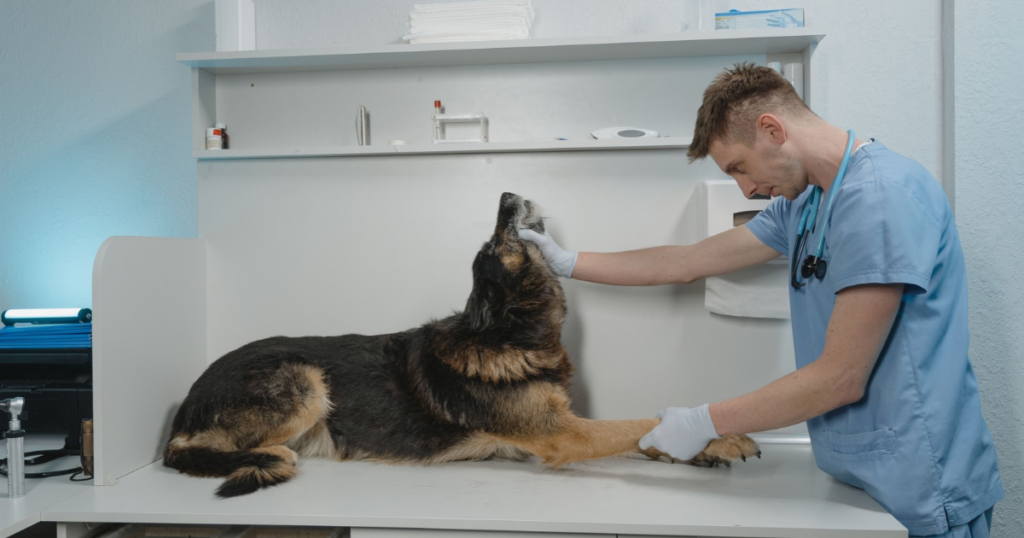
CCL surgery is one of the most common and expensive procedures in veterinary medicine, and whether your policy covers it depends on a distinction most owners never hear about until a claim gets denied.
Does Pet Insurance Cover ACL/CCL Surgery in Dogs?
Quick answer
Yes, accident-and-illness pet insurance plans generally cover CCL surgery regardless of whether the tear happened suddenly or developed gradually, as long as your dog was enrolled before any symptoms appeared and the waiting period has passed.
Accident-only plans are far less reliable here: some insurers cover a CCL tear under accident-only if it resulted from a specific traumatic event, but most exclude it if the tear developed gradually from wear, which is actually the more common cause. This distinction alone determines whether a very expensive claim gets paid or denied.
Dogs technically don’t have an ACL the way humans do. The equivalent structure is called the cranial cruciate ligament, or CCL, and cruciate ligament surgery to repair a tear is one of the most common orthopedic procedures in veterinary medicine, addressing an injury that affects an estimated 500,000 dogs a year in the United States alone.
It’s also one of the most expensive single procedures a dog owner is likely to face. Whether pet insurance CCL surgery coverage actually applies comes down to a handful of specific rules that most owners never learn until they’re already filing a claim.
Key takeaways
- Accident-and-illness plans cover CCL tears from any cause, whether sudden trauma or gradual degeneration, once the waiting period has passed.
- Accident-only plans are inconsistent on this. Sources genuinely disagree here. Some insurers cover a CCL tear under accident-only coverage if it resulted from a clear traumatic event, while most explicitly exclude gradual, degenerative tears, which make up the majority of real-world cases.
- Waiting periods vary enormously, from 14 days with providers like Liberty Mutual and Pumpkin, up to a full 12 months with Nationwide specifically for cruciate conditions.
- The bilateral risk is real and financially significant. Up to 60% of dogs that tear one CCL go on to tear the other, and many insurers will exclude the second knee if the first was diagnosed before enrollment.
- Large, active breeds face the highest risk, including Labradors, Rottweilers, and Newfoundlands, though the injury can affect any dog.
What a CCL tear actually is
The cranial cruciate ligament stabilizes the knee joint, preventing the shin bone from sliding forward relative to the thigh bone. When it tears, partially or fully, the joint becomes unstable, causing pain, limping, and if left untreated, progressive arthritis.
According to the American College of Veterinary Surgeons, large and active breeds carry elevated risk, including Rottweilers, Newfoundlands, Staffordshire Terriers, Mastiffs, Akitas, Saint Bernards, Chesapeake Bay Retrievers, and Labrador Retrievers.
What surprises a lot of owners is that most CCL tears aren’t the result of one dramatic accident. They’re frequently degenerative, meaning the ligament weakens gradually over time from repeated stress, aging, excess weight, or conformational factors, and eventually gives out during an entirely ordinary movement like jumping off a couch or chasing a ball.
This gradual origin is exactly what makes the accident versus illness classification so consequential for insurance purposes.
The distinction that determines whether your claim gets paid
This is the single most important thing to understand before assuming your policy will cover a CCL injury.
Accident-and-illness plans: the safer bet
Comprehensive accident-and-illness policies cover CCL surgery regardless of how the tear happened, whether it was a sudden traumatic injury or a gradual, wear-related tear, as long as the dog was enrolled before any symptoms appeared and the applicable waiting period has passed.
This is the coverage type most veterinary and insurance sources recommend specifically because of how common the degenerative form of this injury is.
Accident-only plans: genuinely inconsistent between sources
Here the guidance actually conflicts depending on which source you check, and it’s worth being upfront about that rather than smoothing it over. Some industry sources state that most providers classify CCL tears as accidents or injuries by default, meaning they’d be covered under accident-only plans.
Other sources are more specific: accident-only coverage applies only if the tear results from a clear, sudden traumatic event, like a fall or collision, and explicitly does not cover tears that developed gradually from wear, aging, or repeated strain, which multiple veterinary and insurance sources agree is actually the more common origin of this injury.
The practical risk
If your dog has been limping on and off for a few weeks before you notice it’s serious, an accident-only insurer may reasonably classify that as a degenerative, gradual tear rather than a sudden accident, and deny the claim.
If you’re relying on an accident-only plan specifically because it’s cheaper, it’s worth confirming in writing with the insurer how they classify CCL tears, rather than assuming coverage based on general marketing language.
What pet insurance CCL surgery coverage actually costs to use
| Item | Typical cost |
|---|---|
| Diagnostic imaging and pre-surgical workup | $500 to $1,500 |
| TPLO surgery (most common technique), per knee | $3,500 to $10,000 |
| Extracapsular lateral suture (smaller and mid-sized dogs) | $750 to $2,000 |
| TightRope procedure (smaller and mid-sized dogs) | $1,000 to $2,000 |
| National average, CCL surgery overall | Around $3,525, ranging $2,793 to $6,417 by location |
| Bilateral case (both knees, over time) | Often doubles the single-knee total |
With a typical 90% reimbursement plan and a $500 deductible, a $5,000 surgery would leave you paying roughly $1,000 out of pocket instead of the full amount, which illustrates why insurance timing matters so much for a breed at real risk of this injury.
So does pet insurance cover TPLO surgery specifically? Yes, TPLO is simply the most common surgical technique used to repair a torn cruciate ligament, so it’s covered under the same accident-and-illness terms as any other CCL repair method, not treated as a separate or optional procedure.
How pet insurance CCL surgery waiting periods compare across providers
| Provider | CCL waiting period | Notes |
|---|---|---|
| Liberty Mutual | 14 days | Among the shortest waiting periods in the industry for this condition |
| Pumpkin | 14 days | Same short waiting period as Liberty Mutual |
| Trupanion | Standard illness wait | Confirms CCL coverage under base accident-and-illness plan, including breed-specific cruciate risk |
| Embrace | Standard illness wait | Confirms CCL coverage under base plan with no prior symptoms at enrollment |
| Nationwide | 12 months | Notably longer than most competitors specifically for cruciate ligament conditions |
Always confirm the current waiting period directly with the provider, since these terms are updated periodically and vary by state.
The bilateral knee problem
This is a detail that catches a lot of owners off guard after their dog’s first CCL surgery.
Research cited across multiple veterinary sources indicates that 40% to 60% of dogs that tear one CCL will go on to tear the other within a few years, often due to the altered gait and added stress placed on the healthy leg while the first one heals.
Financially, this means a single CCL diagnosis can realistically turn into two separate surgical events over a dog’s lifetime.
It’s also why insurers pay close attention to bilateral exclusion clauses: if one knee was diagnosed with a CCL issue before enrollment, many providers will treat a future tear in the other knee with more scrutiny, and some will exclude it outright depending on the specific policy wording.
What to check before you need this coverage
- Confirm your plan is accident-and-illness, not accident-only, if CCL risk is a real concern for your breed. This single choice affects your coverage more than almost any other policy detail.
- Ask specifically how the insurer classifies CCL tears if you’re considering an accident-only plan, rather than assuming coverage based on general marketing claims.
- Check the exact waiting period, since it ranges from 14 days to a full 12 months depending on the provider, a massive difference if your dog is already showing early signs of joint issues.
- Understand the bilateral exclusion policy before your dog’s first knee surgery, not after, since it affects how you should think about the second knee’s risk going forward.
- Enroll before any limping or lameness is ever noted, since even an undiagnosed symptom on a vet record can be used to classify a later CCL diagnosis as pre-existing.
How to reduce risk and manage costs
Getting the most out of pet insurance CCL surgery coverage starts before your dog ever shows symptoms.
Enroll before any limping is ever noted, ideally as a puppy. Since even an undiagnosed early symptom on a vet record can be used to classify a later CCL diagnosis as pre-existing, early enrollment is the single biggest lever for pet insurance CCL surgery coverage to actually apply.
Keep your dog at a healthy weight. Excess weight is a documented contributing factor in gradual, degenerative CCL tears, and managing it is one of the few genuinely preventive steps within an owner’s control.
Choose accident-and-illness coverage over accident-only if your breed carries elevated risk. Given how often CCL tears are gradual rather than sudden, this single choice affects whether a very expensive claim gets paid far more than any other policy detail.
Ask directly about the bilateral exclusion before the first surgery, not after. Knowing how your policy treats a second knee in advance changes how you think about the real financial exposure of this condition.
Frequently asked questions
Yes, pet insurance CCL surgery coverage applies in most cases under an accident-and-illness plan, as long as the dog was enrolled before symptoms appeared and the waiting period has passed. Dogs technically have a cranial cruciate ligament (CCL) rather than an ACL, but insurers and owners commonly use the terms interchangeably.
It depends on how the tear happened and how your specific insurer classifies it. A tear from a clear, sudden accident is more likely to be covered under accident-only. A gradual, degenerative tear, which is actually the more common cause, is frequently excluded under accident-only plans. Confirm this directly with any insurer before relying on accident-only coverage for this risk.
The most common procedure, TPLO, typically runs $3,500 to $10,000 per knee, with a national average closer to $3,525 for the surgery itself. Including diagnostics and rehabilitation, total costs commonly land between $1,500 and $12,000 depending on technique, location, and severity.
Generally yes, as long as neither knee showed symptoms before enrollment. If one knee was already diagnosed before your policy started, some insurers apply a bilateral exclusion that can affect coverage for the second knee, even if it was never previously affected.
Large, active breeds carry the highest documented risk, including Labrador Retrievers, Rottweilers, Newfoundlands, Staffordshire Terriers, Mastiffs, Akitas, Saint Bernards, and Chesapeake Bay Retrievers, though the injury can occur in dogs of any size or breed.
It varies significantly by provider, from as short as 14 days with insurers like Liberty Mutual and Pumpkin, up to 12 months with Nationwide specifically for cruciate ligament conditions. Always check this specific detail if your dog’s breed carries elevated risk.
Yes. Whether you call it a torn ACL, a torn CCL, or simply dog knee surgery, it’s the same underlying injury and the same coverage rules apply: covered under a standard accident-and-illness plan once you’re past the waiting period, with no special exclusion just because the terminology varies by who’s describing it.
The bottom line
CCL surgery is common, expensive, and genuinely one of the areas where the type of policy you choose matters more than almost anywhere else in pet insurance.
Pet insurance CCL surgery coverage under an accident-and-illness plan applies regardless of cause once the waiting period passes, while an accident-only plan leaves real uncertainty depending on whether the tear is classified as sudden or gradual, and gradual is actually the more common scenario.
For breeds already at elevated orthopedic risk, confirming this one detail before you buy is worth more than comparing another few dollars in monthly premium.
For breed-specific risk profiles, see our guides on Labrador Retriever pet insurance and German Shepherd pet insurance, or read how hip dysplasia coverage works, since the two conditions often overlap in the same at-risk breeds.
Our guide on pet insurance and pre-existing conditions also explains more about how waiting periods and enrollment timing work generally. You can also learn more about how we research every guide on our About page.
Sources
- Progressive, Does Pet Insurance Cover Surgery
- PetInsureNow, Does Pet Insurance Cover ACL Surgery in Dogs
- MetLife Pet Insurance, How Much Does Dog ACL Surgery Cost
- CareCredit, How Much Does CCL (ACL) Surgery for Dogs Cost
- Hepper, Does Pet Insurance Cover Cruciate Surgery (2026)
- Accident-Only vs Accident-and-Illness Pet Insurance (2026)
Sarah researches and writes PetCoverToday's guides, checking every cost figure, coverage term, and policy rule directly against insurers' own published pages and, where relevant, veterinary and industry sources. PetCoverToday is an independent research resource, not a licensed insurance agency, and does not sell policies directly. Read more about how we research and fact-check every guide.
Pingback: Rottweiler Pet Insurance: The 27x Cancer Risk Guide (2026) - PetCoverToday